Showing posts with label ASW. Show all posts

Monday, December 1, 2025

Sentimentality Is Understood ...

 ... but this is filled with overstatements. 

S-3 Viking sub hunter has a warning for Russia’s navy

States the author and continues with ... triviality: 

The S-3 Viking left frontline service years ago, but its record stalking Soviet submarines still hangs over today’s naval standoffs in the North Atlantic and Arctic. As Russia leans harder on undersea power to challenge NATO sea lanes, the Viking’s history reads less like nostalgia and more like a pointed reminder of what a dedicated carrier-based sub hunter can do to a fleet that underestimates it.

The reason this piece is a) trivial and b) therapeutic is simple: ANY submariner in the world knows that the WORST enemy of any sub, be it Russian, American, Chinese (especially Chinese) or British with French is ASW/Patrol aircraft. The truism goes--if you see the P3 Orion/P8 Poseidon/Il-38N in periscope--you are dead. Vikings were excellent ASW aircraft, deeply respected both in the US Navy and by Russians. But here is the trick, once long-range anti-shipping missiles entered the fray the issue of Flaming Datum grew in significance because as of 2025 even with Jet-powered aircraft such as S-3 Viking was or P-8 Poseidon is--you need to still get low and slow to allow MAD to search for any kinky signature. And as you might understand everything revolves around Operational Sweep which say ASW helicopters (the only ASW aircraft available for ASW duties on carriers) cannot provide in the times when your Datum is many hundreds kilometers away. Here is a very crude explanation of the POD (Probability Of Detection) depending on Operational Sweep. 


And here is a reminder (again), that in modern conditions, the Flaming Datum (a position from which enemy sub can launch at Carrier Battle Group) could be removed from the US Navy force up to 1,500 kilometers--this is the area of 7 million square kilometers. Nothing today can ensure security of any NATO's fleet in the open ocean against the carriers of P-800 Onyx (1,000 + km range) and 3M22 Zircon (1,500 km range). And I will remind you AGAIN--this is how search area looks like:

Good luck, especially considering NATO's air defense systems. Correct, Russians looked at the "warning" and decided to change not just rules of ASW chess, but simply change the chessboard. That is why Sergei Lavrov yesterday stated what I was stating for the last 11 years. As per S-3 Vikings--excellent ASW jets for their time, a feared and respected enemy:

I know some of my friends will have a sentimental moment. We all do once in a while. 

Thursday, September 4, 2025

No, Sweethearts ...

 ... pointing out price tags absolutely doesn't explain REAL capability. And ASW IS an organic capability of any ship since 1960s with the exception of purpose-built ships such as small missile ships or aircraft carriers. 

NATO ally Norway is buying advanced warships from the UK in its biggest defense deal ever. NATO officials say the move will sharply strengthen its ability to hunt enemy submarines in the North Atlantic. The £10 billion ($13.5 billion) agreement for Type 26 frigates will tie Norway's navy more closely to Britain's, creating a combined fleet of 13 vessels designed for anti-submarine warfare. London says the ships will bolster NATO's presence in northern Europe as tensions with Russia rise. A NATO official, speaking on the condition of anonymity to discuss the allied military capabilities, said the deal provides Norway with "advanced capabilities" in anti-submarine warfare and "other critical missions in the maritime domain." The official said that this "contributes to the broader collective defense" of the alliance. Norway shares a relatively small border with Russia compared to its Nordic neighbor and newly minted NATO ally, Finland. However, the country has a long stretch of coastline well above the Arctic Circle with direct access to the strategic Norwegian and Barents seas.

Here is the catch--in case of (God forbid) real war these toys' combat balance will be counted in minutes, at best hours. 

The same goes for all NATO's surface fleets including their naval bases--they will be destroyed. ASW still remains a critical combat task for fleets anywhere, but if anyone thinks that Type 26 FFG with its Sea Ceptor air-defense is capable to avoid leakers from the salvo of P-800 Oniks, let alone 3M22 Zircon, or even 3M54 Kalibrs at terminal with their M=3 and violent anti-AD maneuvers--I have a bridge for sale. Cash only. 

Considering an extremely low level of the British military and the state of the shipbuilding industry, which at some point DID produce a magnificent Royal Navy, the only thing they are capable of is building of legacy platforms which are not survivable in the modern combat environment. I will remind you again, what the area of search for a single deployed pr. 885M Yasen-class SSGN armed respectively with P-880 Oniks, 3M22 and 3M22M Zircons looks like. 

Ah, yes--another thing: without the US' ISR capabilities which would provide targeting in the first hours of the conflict (after that they will be shot down or suppressed), Russia will be able to continue providing reliable targeting globally, which allows the use of the weapons at their maximum range. Did I mention that NATO's AD technology is pathetic? Yes, that--proven empirically on very many occasions. 

Friday, May 30, 2025

When You Are A Cretin ...

 ... who still thinks that torpedoes are detected by ... radar (they never heard of sonar). Obviously, moron (or collection of morons) has no idea what modern ASW is, as well as what that is. 

R--being the range of detection and D--being the distance of avoidance and that the issue of Flaming Datum for MK48 today is just the matter of a few seconds for developing firing solution for such things as Otvet. And why the angle Alpha is arcsin of Vsub/Vship. The CO of a sub who attacks surface target from 5 nautical miles by torpedo commits the crime against his submarine and crew, because he just killed them. But not for these imbeciles who post this pseudo-military BS. 


Per JDAMs and QUICKSINK, seriously? The amount of this smut passing for "knowledge" about military is astonishing. Let me explain--the range of this QUICKSINK thingy is... drum roll ... 15 nautical miles (24 km). Modern shipborne air and surface radar will see air target and will develop firing solution for AD complex well in advance. But that is not even the point. If we take PLAN, the range of its Type 055 DDG's main striking anti-ship weapon YJ-18 (I avoid speculating here on all those YJ-21s) which is a version of Russian 3M54 Kalibr with the range of 540+ km with the speed at terminal reaching M=3. If we assume that the data on YJ-21 is correct--it is 1,500 km. Who's navy is useless then? Russians, meanwhile, shake in their boots ... from Homeric laughter while observing this "capability" from 1950s and are wondering, how much more BS will be produced by all those media and journalism degreed cretins before they have to face the reality of them being useless ignorant cucks who wouldn't even know what the Operational Sweep is. What can I say--cope harder. 

Friday, September 13, 2024

Anti-Submarine Warfare...

 ... military porn. Il-38, IL-38 N (Novella) and Tu-142s of the Pacific Fleet in action)...

Okean-2024 continues. I talk about this and Prince Alexandr Nevsky in my new video which is coming up soon. Just a quote from this venerated Russian hero: Those who come to us with sword, will die by sword. On that the Russian Land stood and will continue to stand. (c). 


Friday, July 5, 2024

It Is Not Just Chinese Navy (PLAN)...

 ... these are general principles of Search Theory and ASW. One minor correction though--MAD (Magnetic Anomaly Detector) still remains largely a corroborative (not pin-point) means of detection. Main "cavalry" are sonobuoys for developing a contact and tracking a submerged sub. But the video is still decent and I decided to post it here for general educational purposes. 

Always remember--the worst enemy for a sub is a Patrol/ASW aircraft. Once it sees you in real combat, chances are you are not coming back to your home base.

Sunday, September 17, 2023

Long Time In The Making.

Finally, Military Acceptance produced ASW video. It is in Russian, but it finally reveals the work of ASW/Patrol aviation, those unglamorous beasts who can decide the outcome of a large war. 

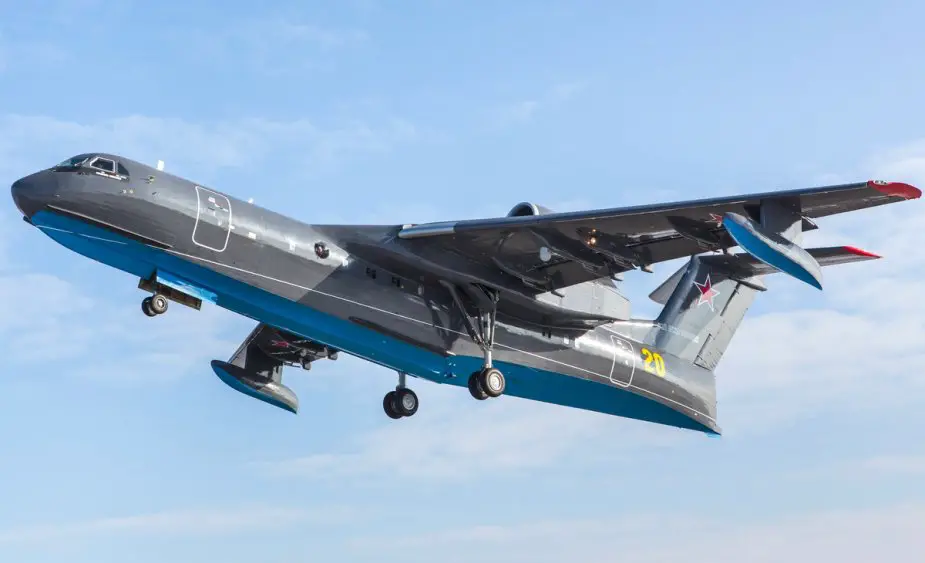
No, the video does not delve into the intricacies of the Search Theory, Operational Sweeps, tactical hydrology and Probabilities--this stuff is a lot of math and physics, and is for cadets of naval academies with appropriate clearance. But it still provides good visuals and some news. In fact, very important news--Beriev 200, a legendary firefighter Be-200 Altair, is coming home to what it was originally designed for--ASW

So, we can only speculate what ASW/Recon suite will be installed on them. Same as what will the substitute for venerable Ka-27, Ka-65 Minoga be. 

Thursday, April 20, 2023

Mmmm, I Don't Know.

It is difficult to comment on that. Not that it couldn't have happened but there are some issues:

The Iranian navy intercepted a US submarine in the Strait of Hormuz and forced it to surface and change its course, Rear Admiral Shahram Irani told reporters on Thursday. However, the US has denied the claim. According to Irani, the nuclear-powered USS Florida was approaching the strait in complete silence when it was detected by an Iranian Fateh-class diesel-electric submarine. The Iranian vessel “forced this American submarine to come to the surface and cross the Strait of Hormuz on the surface of the water,” Irani said, according to Iran’s ISNA news agency. Irani added that the US submarine attempted to enter Iranian waters, but changed its course following a warning from the Fateh. The admiral called on the US to explain why the Florida attempted to violate Iran’s borders, and declared that American vessels “must observe all international rules from now on.” The US denies that the encounter ever took place. “A US submarine has not transited the Strait of Hormuz today or recently," the commander of the US Fifth Fleet, Timothy Hawkins, told Reuters. “The claim represents more Iranian disinformation that does not contribute to regional maritime security and stability,” Hawkins added.

And here is the issue, which is confusing. USS Florida is an Ohio-class former Strategic Missile Submarine (SSBN, aka Boomer) which has been converted to SSGN, meaning that this old lady carries now 154 TLAMs and is specifically designed for primarily land-attacks with conventional means (Tomahawks also can carry a nuclear warhead). TLAM's range in its most popular version--Block III/ IV--is around 1,600 kilometers, so you can easily draw the circle from say Bushehr Nuclear Plant (a possible target for attack) and you will see yourself that to attack it, the same goes for Tehran, it is enough for modern SSGN to be merely in the Gulf of Oman (and Arabian Sea) never entering dangerous Persian Gulf through an extremely narrow Strait of Hormuz. Why would one do that? I know, I know--PR and all that, but ASW has its own logic. 

Moreover, no matter how good Iranians are, but I doubt that sonar and sensor suite on their single Fateh-class sub measures up to updated Ohio-class SSGNs which still remain one of the most silent in the world. This is not to say that they cannot be detected, they certainly could be and have been... by Soviet and Russian SSNs. But something tells me that even if the contact and even ping between Fateh and USS Florida has happened it didn't happen anywhere near Persian Gulf, plus... and here it comes--Iranian Navy has three Russia-built Kilo (pr. 877) SSKs and those for decades had a title of "black holes" in the sea due to their extremely low acoustic signature. And yes, those guys, have been involved in hide-and-seek with US Navy's Los-Angeles and Virginia classes everywhere around Russian littorals. So, could it be that Iranians confabulate? Absolutely! But could it be, considering a steady loss of competence in the US across the board, that someone wanted USS Florida in the Persian Gulf for PR purposes? Absolutely! So, don't torture me with the questions--I don't know. Otherwise I will get engaged and write massive posts on Operational Sweeps, Detection Probability Densities and other "lovely" ASW thingies with a lot of math... fade in the dark with evil laughter...

;)))

Sunday, October 31, 2021

Why They Are Nervous. Short Excurse Into the Modern War. Part 4.

Now to the most important part. Recall what I wrote about ASW and missile attack in the previous three posts? Now forget it all because today it matters only under some extremely limited circumstances. Here is a simple illustration about CBG's relative scale to modern ranges. 

In this case, as you can easily see, it really doesn't matter how you configure your ASW for CBG, we don't even talk about a group of ships on their own, with only MH-60R Seahawks as air ASW assets at their disposal. Those are magnificent and advanced machines but their problem for modern ocean-wide warfare is the fact that they have a speed of 270 kilometers per hour and a maximum range of 830 kilometers, that is the range at which they can fly in ASW configuration in a straight line, but as you can already surmise, ASW is a very energy costly affair (with all this hovering and dipping at the Datum), granted that this Datum is (was) provided by good ol' Soviet Charlie-IIs and Malakhits. 

This time is over. Introduction of P-700 Granit with its range of 600 kilometers and fully networked salvo of these missiles in early 1980s was the thing which finally transferred ocean warfare from a combination of ASW and Air Defense to almost strictly Air Defense problem, granted huge Project 949A (Oscar-IIs) SSGNs could be tracked by the US SSNs at the ranges beyond CBG's ASW ranges. Sometimes they could track Oscars, sometimes they couldn't. But there was one thingy about those pesky P-700 Granits--unlike with Malakhits and other older anti-shipping missiles, there were a significant chances to miss a Flaming Datum when Oscars launched their Grantis. Once they were airborne it was entirely up to E-2 Hawkeyes to detect such a salvo and vector on-duty F-18s and F-14s for an intercept. Let's fast forward a bit, P-800 Onyx emerges and while officially its range is 660 kilometers, it is a much more advanced missile and its latest versions are reported to have a range in excess of 800 kilometers and speeds in excess of Mach=3. Look above at the illustration. What's left then? How to deal with this threat? Right--one needs Aegis and Standard missiles which theoretically can handle a salvo of...P-700 Granits. Theoretically. 

But P-700s are old missiles, what are you going to do against Onyx with submerged start? Welcome to a missile exchange paradigm and welcome to Salvo Equations. But since we discuss a real war not some fanboys' rah-rah bullshit from Popular Mechanics or Forbes, we have to recall that the war is a probabilistic event. So, what are, then, ways both warring sides approach and tackle this problem? Remarkably they are very similar because the same math and physics is used. For a commanding officer of ANY sub in the world carrying anti-shipping (or even TLAM) missiles the first thing which comes to mind is the assessment of Probability of a Success of whatever his sub is going to do, in our particular case--shooting and destroying a surface target(s).  In old times poor lads and their navigator and weps guys would calculate this probability by hand, by calculators etc. Until Combat Informational Control Systems or Battle Management Systems (Computers) which started to appear in their advanced forms precisely starting from the times mentioned many times before Charlies started to deploy, they started to calculate those probabilities based on the fusion of incoming data ranging from targeting to tactical and operational data from many sources (sonar, comms, visual, radar etc.). 

As we all know from the basic probability course, the probability of just about any event is calculated by multiplying probabilities of many related events which must occur in order for us to have a shot at achieving what we set to achieve.    

As you can see yourself a lot has to be done to kill a target. Even if you have a probability of detecting a target Pdetection =0.95, and the reliability of our targeting Ptargeting=0.95 and we have a probability of remaining undetected by enemy equaling 0.9 and whatever other probabilities factor in our probability of killing our target Pn=0.9, we will get: Pkill= 0.95 x 0.95 x 0.9 x 0.9 = 0.731. These are not the best chances but they are solid. We would love our chances to be within 0.9-0.99 (wink, wink) range. So, how do we increase our chances? Range and speed and excellent combat training. 
 
Once tactical characteristics of 3M22 Zircon have been confirmed, a man, who unlike me has an impeccable background in submarine warfare, Captain 1st Rank Igor Kurdin, who is usually very reserved about weapons, went on record: 

«Дальность «Циркона» составляет от 500 до 1000 километров. С такого расстояния никто нашу подлодку не засечет, если только за ней не следят давно и целенаправленно», – рассказал председатель Санкт-Петербургского клуба моряков-подводников ВМФ, капитан 1-го ранга Игорь Курдин. Собеседник напомнил, что задача американских противолодочных сил – засечь нашу АПЛ до того, как она произведет ракетные пуски. «Гиперзвуковая скорость предполагает, что после пуска «Циркон» практически невозможно уничтожить», – добавил он. 

Translation: “The range of the Zircon is from 500 to 1000 kilometers. From such a distance, no one will spot our submarine, unless they have been tracking it for a long time and purposefully, "said the chairman of the St. Petersburg Navy Submariners' Club, Captain 1st Rank Igor Kurdin. The interlocutor recalled that the task of the American anti-submarine forces is to detect our nuclear submarine before it launches missile launches. “The hypersonic speed suggests that once the Zircon is launched it is almost impossible to destroy,” he added.

We look again at the illustration in the beginning of this post and take in the range of 800 km. If such a range is viewed for regular Onyx with its varying speed on the flight path in excess of Mach=1.5-2.0 with acceleration to M=3.0 at the terminal, we are looking at the average velocity of M=2.0, which gives us Time = 800 km/2450 km/hr = 0.32 of an hour or roughly 19-20 minutes. With Zircon and its average of Mach=9 we are looking at 800/11025= 0.072 of an hour, which is around 4 minutes. No system can react to this, nor there are any air defense means which can intercept such a missile in any quarters, be it head on or, let alone, in pursuit, granted it is even detected, not to speak of a Datum which may stop being a Flaming one. This is for only one 3M22, when they fly in salvo of 2 or more...take a guess.  It comes down to merely reliability of missile itself, its ability to perform strictly on its technical merit which defines the probability of a kill. Here is what I wrote three years ago in my book:

A going and reasonable assumption today in regard to the latest anti-shipping hyper-sonic weapons is that the probability of intercept of such weapons, capable of Mach=9+, well in excess of any existing anti-missile weapons, even without maneuvering on terminal approach, is statistically insignificant. That is, in a basic Salvo Model for the losses of attacked force:

Where b1 is staying power of ships in enemy force B, which is the number of the missiles required to take out of action those respective ships. It takes a single missile of such a class to put any large combatant, with the possible exception of a nuclear aircraft carrier, completely out of action, thus making b1 =1. Coefficient b3 denotes a defensive power of the ships in B, which is the number of good enemy shots which will be destroyed or deflected by the defender—there is really no objective evidence of modern AD systems being capable of intercepting hyper sonic missiles. This makes b3 = 0 and, consequently, makes the multiple of b3 B = 0 ; this is a definition of a turkey shoot, in which the attrition ΔB of the opposing force, depends strictly on a number of hyper sonic missiles in A’s salvo at B. In other words, the equation is reduced to:

because  b1 =1 Alpha (α ) denotes the striking power of A, which is the number of missiles which would hit the target if there were no defense. There is no defense currently and this effectively eliminates B as a player in case of a missile exchange with A, thus making the exchange mostly a matter of reliability of missiles themselves. 

We will review those salvo transformations later, but for now a juicy piece of math with formula for a salvo by a group of subs, or missile carriers on the surface, just tweak some coefficients.

Pay attention to both Qs. You can easily find the textbook The Submarine Tactics by Captain 1st Rank Khvosh in Russian and, of course, intellectual tour-de-force by legendary late Captain Wayne Hughes and his Fleet Tactics and Coastal Combat
 
To be continued...

Wednesday, October 27, 2021

Why They Are Nervous. Short Excurse Into the Modern War. Part 3.

This is a first Soviet submarine launched (submerged, mind you) anti-shipping missile P-70 Amethyst (Ametist):

It was a further development of a venerable P-15 Styx. P-70 had a maximum range of 80 kilometers (Wiki as always is full of shit) and was subsonic at M=0.9. This was 1968. In 1972 more advanced anti-shipping missile P-120 Malakhit started to be procured both on surface ships and submarines.
Malakhit, with its range (launched from submerged SSGN) of 120 kilometers and traditionally massive (500 kilograms) conventional warhead (it could also be a nuclear one) presented a new challenge to the US Navy. A single Charlie-class (pr. 670) SSGN could carry 8 of Ametists for this sub first versions, or 8 Malakhits for Charlie II (pr. 670M). 

While the problem of Flaming Datum (recall, it is when sub is detected while launching its weapons) for all navies was well known before. It was one thing when a submarine launched a salvo of even long-range torpedoes, thus creating a Flaming Datum, a swarm of 40 kilometers range and around 40 knots torpedoes was bad enough problem in and of itself (especially when armed with nuclear warheads), but it was a completely different situation when there was a salvo of missiles, flying with the speed of a fast commercial jet, and which created a datum in a very respectable distance from target. That was a whole new game.  

As you already know, something like P-120 Malakhit was creating the necessity for, say Carrier Battle Group, to be on alert constantly and have enough ASW capability to sweep a moving area of A=3.14 x 120^2= 45,216 sq. kilometers practically non-stop. In general, any CBG always looks like a floating ASW and Air Defense theme park. This is how CBG looked in 1970s and continues to look with some "adjustments" (some of them inspiring awe in their recklessness) even today. 

Theoretically, for any Charlie SSGN in order to kill a carrier, it needed to get in between the Zone of Close and Remote ASW, granted this Charlie (or Charlies) could sneak pass the ASW aviation in the Zone of Remote ASW (patrolled by S-3 Vikings from carrier and P-3 Orion "on call" if need be). Vikings were no joke and, of course, provided a very good operational sweep (I know someone whose heart will be filled with nostalgia and joy), but if that zone was overcome and targeting was received it absolutely didn't mean that this Charlie was out of the woods. Far from it--not only those Vikings were still on station, now Charlie had to face those pesky SH-3 Sea King ASW helos. All in all, it was an extremely hazardous undertaking for those Soviet SSGNs but the real clusterfuck would have unfolded once the salvo was launched from beneath the waves. 

This meant an immediate giving up of own position and creation of a Flaming Datum in most cases (not all). Not only launched missiles would leave a lot of "clues" on the surface, including the registration of a salvo by the E-2 Hawkeye's Radar but the launch would be a significant acoustic event. So, here we are--enter the Flaming Datum. What happens next? Easy: CBG has around 120 kilometers : 1100 (around M=0.9) kilometers per hour by Malakhit = roughly 0.11 of an hour, or about 7 minutes before missiles arrive. So, the Air Defense gets all excited, all those Sea Sparrows air-defense complexes on Spruance DDGs in carrier's escort, as well as Talos (Later, Terrier) AD complexes on USS Long Beach (remember these are early to late 1970s we are talking about) all go on-line. Those airborne F-14 Tomcats start their supersonic dash towards the assumed route of those Malakhits, hoping to intercept them using their AIM-9 Sidewinders, AIM-7 Sparrow or AIM-54 Phoenix missiles. So, whatever it takes and the ballet ensues. 

Meanwhile, those Sea-Kings they already know fairly accurately where the hell broke loose and what do they do? Right, they go for jugular of the Flaming Datum and rush there to do their thing, depending on the range from Flaming Datum and with their maximum speed of 260 kilometers per hour, they can reach datum in anywhere between 20 to 5 minutes. Let's be reasonable and say 15 minutes--this is our Time of Delay or proverbial Tau. As you might expect, Charlie which just launched is now in a full break-off mode and CO and the crew of Charlie know damn well that they need to rush and each minute of Tau increases their chances, especially since Sea Kings do not have MAD and everybody on board Charlie prays that S-3 Vikings will be held at their stations because of the tactical assumption that this salvo could be merely a distraction and even bigger game expects CBG down the road. Like this:

So, for anyone who wants to experience all the "beauty" of operating a dipping sonar, they can get a kick out of ASW by reading this:

Or get the load of joy by looking into the theory of sonobuoy barriers, believe me--it is a lot of "fun". I know, my graduation thesis had a lot to do with ASW and those dippings. But as the thesis by Yoash, Atkinson and Kress states: 

A perfect cookie-cutter sensor is a significant simplification. In reality the dynamics of sonar detection are quite complicated and depend upon the acoustic properties of the environment, which impact the transmission loss between the target and sensor (Lee and Kim, 2012). However, cookie-cutter sensors are commonly used in many maritime search and detection applications to generate insight. Random search, the cornerstone model for many search analyses, is based on a cookie-cutter sensor (see Chapter 2 of Washburn (2002)) and often provides similar results to more complicated and realistic detection dynamics (Lee and Kim, 2012). Furthermore, many ASW models use cookie-cutter sensors, including Danskin (1968), Shephard, et al., (1988), Baston and Bostock (1989), and Washburn (2002).
Read attentively, especially highlighted in yellow--this is where in real life tactical acumen of submarine's CO and his crew, training and technical parameters of a sub begin to play a huge role and often draw the line between life and death, between triumph and failure of the hunter and the hunted, who often exchange roles in an instance.  here is a food for thought to you. Think about it, wink, wink. 


FOC (Furthest On the Circle). We will need this reference when we will talk about our times, in 2020s. 

To Be Continued...

Sunday, October 24, 2021

Why They Are Nervous. Short Excurse Into the Modern War. Part 2.

Now, since there was a consensus on me continuing with this ASW thingy, immediately--THE clarification. On the illustration with circles-ranges of Russian subs along the Atlantic coast of the United States (in the previous post) we view the situation from the point of view of the known position (and even Flaming Datum, which IS discovering sub's position by it blowing its cover) and immediately can draw circle-ranges and, in reality, this is how those aggressive humanity-hating, vodka-drinking Russkies will see the map. Not so in Pentagon. Before ANY salvo and, consequently, Flaming Datum (and even this must be discussed with some huge caveats), what American ASW people will see before the hostilities start will be this ugly picture. 

No circles here but only green shaded areas limited by a range of 500 nautical miles. I believe CBO from where the template is taken meant 500 regular miles, but let's assume that these are nautical miles which gives us 1.852 x 500 = 926 kilometers, precisely the range at which 3M22 could be launched in case of (God forbids) war. So, you may continue to mentally fill all those ranges with green thus reaching, eventually 2,000 miles range and beyond where latest mods of 3M14M with the range of 4,500 kilometers could be launched. 

So, looking at this green mess one has to asks a question of how many and where those Zircon-carriers are. If there is no war, but it already begins to smell funny in the air, the only thing you can do is to "pack" these green areas with all available ASW assets without losing readiness for war. Well, while ships in ASW role are fine and dandy, they really are not that great if it comes down to a colossal area such as shown on both coasts. Modern submarine will hear those guys way earlier than they will be able to detect them, and, considering today astonishing advancements in quieting and an "open" water theater both at the Pacific and Atlantic coasts, the sub will simply avoid detection by maneuvering. So, call Jacksonville (VP-8) and also request additional Virginias to run the "perimeter" in hope to run into those pesky Yasens or Oscar-IIMs to prevent them from launching. Well, the big game starts. 

The US Navy is a proud and, despite its problems, still very powerful force. And although a number of credible ASW scholars warned for decades that ASW of the US Navy is a "soft spot", even the ensign fresh from USNA knows that you need to guard US Navy's most important installations and bases. Like Norfolk. So, what do those people do? They take the compass and start choosing the places with the highest Probability Density for the hostile sub's position. I omit for now this rather not difficult issue because at this stage of the warfare we are talking about not tens or even hundreds of kilometers of ranges, no, we are talking about thousands.  This is unprecedented in history. Mind you, Russia has already Zircon with the range of 1,500 kilometers and speeds in excess of Mach=12-13 in works. So. You get this (simplified)--you draw the baseline and then draw (with Norfolk in center) a semi-circle which matters a great deal, especially its shaded ocean part, which stretches (has radius) 1,000 kilometers into the Atlantic. 

This is where your aggressive, democracy-hating, Russian Yasen or Oscar-II M SSGNs will be, probably. Yes, a good term to use in this particular case--probably. How much is this "probably"--later. Now everything gets easy, not. The area of this probable Russkies' "station" is just one half of this circle: A=0.5 x 3.14 x 1000^2= some measly 1.57 million square kilometers. Easy-Peasy (I kid, I kid). Now, once ASW/Patrol aviation enters the picture--mind you, we are still not shooting at each other--we can start calculations in earnest. 

1. What is an Operational Sweep (rate) for a single, say, P-8 Poseidon, or rather a drone, using its main initial detection instrument of MAD--Magnetic Anomaly Detector. As we assumed previously, we give the width of Poseidon's MAD of 2 kilometers, we also assume for Poseidon a slightly higher than venerable P-3 Orion's search speed (P-3 flies at 360 kilometers per hour while "sweeping"), just for the sake of experiment, let it be 400 kilometers per hour. That makes Poseidon's sweep rate, while it will be conducting a Random Search, or SR = 2 kilometers x 400 kilometers per hour = 800 square kilometers per hour. Now we are on our way. 

2. For a single P-8 Poseidon to sweep these "measly" 1.57 million square kilometers area thus requires: 1.57 million sq.km : 800 = only 1,962 hours or about 82 days. I told you--easy, right? Of course, common sense tells us that more than one Poseidon will get involved, but as you already saw previously, unless we are talking about a Flaming Datum (that is either actual detection or sub giving its position up) we are facing Probability of Detection of such sub for a theoretical single P-8 Poseidon as:

In this simple formula our C is just the ratio of our effective search rate or sweep rate (800 sq.kilometers per hour) to the Area to be searched. Which in itself is not a probability of detecting a sub in the area but only a probability of our sensor (MAD) to detect it if it is there. 

We start with an easy example: let's say our Poseidon needs to search the area of 800 sq.kilometers. Our C thus is 800:800 =1, so:

Second sweep over the same area then gives us: 

                POD=1-0.37*0.37= 1- 0.1369 = 0.8631 (Respectable)

The problem, of course, is that once the Area of search increases two fold, to 1,600 sq. km (C=0.5), our POD drops in a single sweep to 0.39. And once we get Poseidon on station sweeping the Area of 4,000 sq.km (C=800/4000=0.2) we will get only POD of 0.18 after 5 hours of sweeping. So, imagine now that in our case we are talking about the area which is THREE orders of magnitude larger. Of course, naturally, it will be assumed that those Russian subs will be abusing the relative safety of farthest edges of this circle. Possible? Possible, but then again--they may simply sneak in and out, or just close in for a launch at 500 kilometer range. What one has to remember, that even from the range of 950 kilometers it takes a salvo of Zircons flying at M=8 to reach the target only 5.5 minutes. And this simple fact throws all modern ASW tactics into a full blown chaos, because any carrier of 3M22 can afford to make a gift of a flaming datum to an enemy, without much risk for itself. Why it is so--later. 

Update: thanks to readers--US used P-8 Poseidon, unlike those of India's Navy, doesn't have built-in MAD and "theoretically" is supposed to operate MAD carrying drone. Well, good luck with that. In the same time, good ol' P-3 Orion still has some life left. You can recalculate for P-3 with its sweep speed, at 60 meters altitude, of 360 kilometers per hour.   

To Be Continued...     

Saturday, October 23, 2021

Why They Are Nervous. Short Excurse Into the Modern War. Part 1.

Patrick Armstrong thinks that they simply ran out of options in terms of color revolutions and he justifiably mentions this: 

Former successes – in recent times, Ukraine twice, Georgia – are becoming failures: Hong Kong, Venezuela and Belarus. The targets have learned how to counter the attacks.

Read the whole thing--it is excellent, as is usual for Armstrong. Then, there is a good piece by Tim Kirby on current US foreign policy, which he calls "surprising" because it is, in many important respects, repeats that of the Trump Admin. As Kirby astutely concludes:

And then, there is this, which brings us to the main point: 

Here is THE main point, as any Western politico with degree in political "science" (or politics), she cannot have a faintest idea what she supports or doesn't whenever it relates to any issue of warfare. And I mean zero, zilch--you cannot, you simply cannot, explain even in the most comprehensive briefings to any person with degree in "politics" and experiences with running basic fiscal-political "protocols" of the West's regional and national election pipelines, how tactical translates into operational, and how operational translates into strategic and, essentially, into the political level when war is involved. You could do this in 1914 and 1945, you still could do it in 1955, however barely, and then "something" happened--it became very hard, and by mid-1960s it all became an alien language to the main shakers and movers of Western politics--people whose only skill in life is how to re-elect oneself or how to navigate regional and national bureaucracies. Don't take it from me, take it from the US armed forces general with Ph.D in physics. These two pages written by a man who knows what he is talking about should be made mandatory for reading by 100% politicos and by about 99% of the  so called military "experts". 

In other words, no contemporary Western politician can have any sound idea on matters which, actually, are the main drivers behind global affairs, because they do not understand modern warfare. They cannot, you need a solid math, physics, engineering and tactical-operational experience as an officer to be able to grasp a profound connection between foreign policies of nations and the global power balance. Latiff laments that "serious scholarly books are written about war and its consequences, but the vast majority ignores them." Tell me about it. Can you imagine trying to explain to Rachel Maddow or this Germany's "defense minister" how the Probability Theory and Theory of Operations applies to modern politics in the times of hyper-sonic weapons, netcentric warfare, AI elements and over-the-horizon surveillance and anti-satellite weapons. Good luck with that, I heard some "political science" courses even include such things, of course, as Game Theory and... and... here is John Mearsheimer of University of Chicago and, allegedly, "realist" teaches this course:

The issue here is not that Mearsheimer can hold those seminars, it is the fact that despite him being a graduate of the USMA at West-Point, class of 1970, he hardly qualifies for any serious  military input because his record of "conclusions" regarding the only country which can wipe the US off the map, Russia, in the last decade demonstrates his complete detachment from the geopolitical reality in so far as the global balance of power and technological revolution goes. Which his latest disastrous and empty treatise proves without a shade of a doubt. A nauseating meandering dabbling into the pile of contemporary Western political and foreign relations theories none of which ever predicted anything. Not to mention the fact that few in the West really know how things work precisely because the only thing they know is how to obfuscate facts to fit narratives. We are not like that, we have some clue and there is no reason to produce a pile of BS for the sake of own academic sinecure, no matter how risible this doctrine-mongering is. In 99% of the cases it is preposterous. 

Now, that we have re-established the fact that Western politicos do not have a clue beyond general political, primarily media-driven, issues and that they can like or dislike anything related to warfare only based on how they are briefed and are told by people with a clue, let's explain now how even knowledge of basic facts of say Search Theory, ASW and physics and math of the modern warfare, namely Salvo model (missile exchange) gives us immediately an exceptionally clear glimpse of this capricious animal of strategy. You see, you need to know not only what to do, you need to know HOW things work and, especially, WHY they work. No course in history, political "science" or social sciences, supported by studying the statistics of GIGO (Garbage In-Garbage Out) can answer this. 

Enter delivery systems and Washburn's classic equation for the so called Random Search in case the "flaming" datum (in our case the position of the submarine) is obtained because... how about the sub launches its anti-shipping missiles and gives itself away. Here we have to review two scenarios. 

a) the war breaks out with a very short escalation (threatening period) phase which sees a "moderate" ASW/Patrol aircraft presence in the area;

b) the breakout of hostilities is preceded by a fairly lengthy escalation (threatening period) phase which sees gradual but fairly fast increase of the ASW forces in the area. 

As you may have guessed it already, we are viewing possible (hopefully, impossible) conflict between NATO and Russia. Assume that in both scenarios you have this operational situation--it is not "strategic" yet, it will become soon. 


The five red circles (circumferences, really) are theoretical positions (done to be best of my ability to a real scale) of Russian Navy's SSGNs all carrying both 3M22 Zircon and 3M14 Kalibrs with P-800 Onyx. The range of roughly 950 kilometers (red circumferences) is given for 3M22. The area of each such circle is roughly 2,000,000 square kilometers (which is about the area of Greenland) and submarines, of course, are located at the centers of those circles. Small blue circumferences, however, in each of the circle are not related to subs, they merely show the scale (of around 50 kilometers) of the range of detection and main caliber gun battles between battleships of the closing period of WW II and they are there for comparison. 

The blue line which splits in two with the arrows at the ends are general routes of the US convoys to deliver reinforcements to NATO allies in case of the war getting (let's assume) into the more-or-less protracted mode, for now without nuclear weapons and the US navy is forced to fight yet another "Battle of the Atlantic". The straight green dashed line and two green rectangles (absolutely NOT to scale) are coverage at the ranges and hours on station (that is conducting some sort of ASW search) by a single P-8 Poseidon. As you might expect, the United States can fast increase the number of the ASW/Patrol aircraft in the area and we will talk about this too, but at this stage ANY scenario, even seemingly most realistic, is viewed ONLY for given the frame of reference, which Western decision-makers lack completely. What also has to be understood--those circumferences and rectangles they are not static, in real life they move, sometimes very actively, especially against the background of such advances in submarine quieting which allows dramatically increase "silent" velocities while being able to use acoustic detection capabilities without much interference. We discount here weather and hydrology factors for now. 

So, enter flaming datum formula. You can see the thesis by the officer of Chilean Navy Alberto Soto for Master of Science Degree in Operational Research (he had Bachelor of Science in Weapons Engineering) in US Naval Post-Graduate School, under the guidance of Dr. Washburn (page. 24, just in case)

Average number of detections with the time z(t):

I once elaborated on this formula which is applicable to the so called Random Search (which also is applicable to a Parallel Search) and there is literally nothing complex in this formula despite the integral sign. As we already established z(t) is a number of detections by whatever (ASW Helo, ASW/Patrol aircraft etc.). So: 

R--is a detection range of our "cookie cutter" sensor. You may ask what the hell a kitchen device has anything to do with submarine hunting. The answer is very simple--all cookie cutters have sharp and well defined edges which are unchanged. In real life, of course, the detection ranges of any sensor, be that radar, sonar or FLIR are subjects to change due to weather conditions, radio-permeability for radar, hydrology for sonar and as a result, for our theoretical calculations we have to assume that ranges do not change and are as sharp and well-defined as the edges of a cookie cutter. (Hint: ASW is the most complex and daunting task in naval warfare). One of my favorite sketches. 


Ranges, of course, vary--if radar range is influenced, among many other things, by the elevation of its antenna and under some conditions could either lose or gain up to 20-30% of its range and its "cookie cutter" shape is circle, the range of, say, MAD, Magnetic Anomaly Detector is a "strip" whose width is the double range and it is not that huge (which will matter later) and varies say between 500 meters to 2 kilometers. Let's assume that it is one kilometer for the ease of calculations, so, in this case MAD's range will be 1 kilometer x 2 = 2 kilometers. It is all simplified, of course.

V--of course is velocity because our sensors move: radar on ship moves with the speed of a ship and leaves behind itself a "strip" with the area of V x 2R, because any sensor looks on "both sides" thus doubling its range (see above about MAD's range). If our radar detection range on the ship is 40 kilometers and the ship moves with the speed of 20 kilometers per hour, that means in one hour it will "cover" the area of 40 x 2 x 20 x 1= 1, 600 square kilometers. If the double width (2R) of our MAD is 2 kilometers, then P-8 Poseidon, flying with speed of (roughly) 400 kilometers per hour, will cover the area of 2 x 400 = 800 square kilometers. 

This "scary" Pi x y(t)^2 is nothing more than the formula of the area of the circle you know from the middle school and it is nothing more than 3.14 x r^2, where our r in this case is an expanding radius of a search circle (with the center of datum) at any given time (t) which is velocity of submarine time time at any given moment starting from the moment Tau (a funny lower case letter at the lower limit of integration of our integral) and it is nothing more than the delay time, between the time of datum--the sub blows its own cover by a missile launch--and the moment helicopter or P-8 Poseidon (or P-3 Orion) arrives at the circle to start its search, or hunt. Say, the sub launched missiles and was detected (Flaming Datum) at noon, 12:00, Poseidon arrives at the expanding circle at 12:30, our tau (delay) thus is 0.5 hours. If the submarine was moving all this time with "let's save our asses" speed (velocity) of 20 kilometers per hour (roughly 12 knots) then the radius of the circle in which Poseidon will have to search is y(t) = 20 x 0.5 = 10 kilometers, thus the area of this circle is Pi x y(t)^2 = 3.14 x 10^2=3.14 x 100 =314 square kilometers.  

This is all tactics but it becomes a serious operation with enormous strategic ramifications once the search (hunt) starts because at this stage a truckload of factors begins to affect all this chaos and we get to see the numbers which today can make any serious American military professional feel very uncomfortable, because once the latest anti-shipping cruise missiles such as 3M22 or Onyx get involved, mathematics becomes insane and ASW operations begin to look daunting, to put it mildly. Because Probability of Detection (POD) of the enemy (Russian) submarine, which is calculated like this:   

Is the major reason behind many recent statements and actions on NATO's part, because it is difficult to fight a war, when you know that you will get defeated badly. But about this later. Waiting for your feedback if I need to continue with this, because real analysis has to have some numerical framework, which is also comprehensible to a well educated layman, who can do basic calculations. 

To Be Continued (maybe?)...

P.S. Someone may say that I gave John Mearsheimer a bad rap, I don't know how anyone who for the last 10 years was on record about "mediocre" Russian Armed Forces and who obviously lacks understanding of physics and mathematics of delivery systems, which ARE the foundation of a nuclear deterrence (anyone can make warhead today), can teach and hold any seminars on nuclear deterrence. Can he answer the question if Kinzhal is a deterrent?  

Tuesday, September 21, 2021

While On Topic. ASW.

Thanks to the excellent Periscope Film Channel which provides wonderful and easily understood archive footage, explaining basics. 

ASW basics.
 

Sunday, June 6, 2021

How Appropriate.

No, I mean it. A reporter for The Telegraph Alan Tovey wrote today a piece which we will review below, but it was this journalist's name which attracted my attention immediately. Could it be a coincidence? Here is why it struck me, because name Tovey is a huge name in the world's naval history. I am talking, of course, about Admiral John Tovey. Whatever the coincidence or, possibly, blood relations, Alan Tovey wrote an interesting piece. Tovey reports:

I don't know exactly why there is a degree of prejudice towards "low-end ships" in both Royal and the US navies, but truth is, the time of the "visual" navies are long gone and if history ever teaches us anything it is the fact that large platforms go only so far in carrying out a variety of naval tasks among which bombing the shit out of defenseless nations and launching TLAMs are just a s mall share of increasingly complex and deadly naval (multi-domain, damn, I used Pentagonese) warfare. Recall CG 59 USS Princeton of Ticonderoga-class and the events of 18 February 1991. I quote from WiKi. 

On the morning of 18 February 1991, during Operation Desert Storm, Princeton was patrolling 28 nautical miles (52 km) off Failaka Island in the Persian Gulf, on the west side of the decoy United States Marine Corps and naval invasion forces afloat. At exactly 7:15 AM local time two Italian-made MN103 Manta bottom-mounted influence mines detonated, one just under the port rudder and the other just forward of the starboard bow, the second explosion most likely being a sympathetic detonation caused by the first. The blasts cracked the superstructure, buckled three lines in the hull, jammed the port rudder, flooded the #3 switchboard room through chilled water pipe cracks, and damaged the starboard propeller shaft. Three crewmembers were injured, one seriously. Despite the severe damage, the forward weapons and the AEGIS combat system were back online within 15 minutes.

At great peril, the Canadian destroyer HMCS Athabaskan moved north through the minefield to deliver damage-control supplies to the severely damaged Princeton, which remained on station for 31 hours until she was relieved. Princeton's commanding officer, Captain Edward Hontz, specifically requested the assistance of Athabaskan despite the latter not originally assigned to the area. Unlike most ships of her size, Athabaskan could simultaneously operate two large CH-124 Sea King helicopters, which could search out mines for long periods. As a gesture of solidarity, Athabaskan winched over several cases of beer for the crew of Princeton, since United States Navy vessels were dry.[1]

Princeton, which suffered from a locked starboard propeller shaft and a locked port rudder, was guided through the minefield by the minesweeper Adroit. Temporary repairs were conducted first in Bahrain, and then in the port of Jebel Ali near Dubai by the duty destroyer tender Acadia, and finally in a Dubai drydock. After eight weeks, Princeton returned to the United States under the ship's power for additional repairs. The ship and her crew were awarded the Combat Action Ribbon.

You see, how those quirky Canadians came in handy, not to mention mine-sweepers and other "low-end" tech which effectively saved Princeton. Yes, all those inglorious boring tasks of ASW, mine-sweeping, anti-diversionary operations, scouting, oh boy, you name it. But as I said it many times, ships are just platforms, and it matters HOW effective they are in what they do, not how they look like. Of course, I smile at Britain's statements about becoming a "shipbuilding superpower", but truth is, even in the hypothetical fanboys' scenarios such as "who is better", I wouldn't even allow any of my squadron's assets near anyone's littoral before having couple of these guys doing their "unglamorous" thing:

Not to mention the fact that in the missile exchange scenario between this $4 billion monstrosity:
 
And this "low-end", which is more than 10 times less expensive
Guess which one will come out on top. Do you need a hint? 

I totally get UK's phantom pains from once great, now gone, empire and a glorious naval history but in terms of "low-end" let me remind desperate British one little low-end ship which bathed itself in glory and her ungainly appearance could never eclipse the fact of its excellent crew and skill, together with ability to do what's needed when it was needed to be done. HMS Petard (G56).

Not bad, not bad for mere 1700 tons of displacement. I guess it is what you can do which matters in the end of the day, and there is nothing "low-end" about it.