Showing posts with label Michael Kofman. Show all posts

Tuesday, October 26, 2021

Becoming Estonians.

Russians are stereotyped globally as drunks and hot shots (Irish might contest that), English--as pompous and having bad teeth, in Russia Estonians are stereotyped as slow. Consider this: what is infinity? It is when Estonians count Chinese. Evidently, most of the American geopolitical pseudo-intellectuals are Estonians, otherwise how can you explain this. Kofman and Kendall-Taylor write in this petty cash rag for STEM-challenged "thinkers", Foreign Affairs, about the myth of Russian decline:

As I am on record for many years, the Russia Study field in the West is a fraud and the crop of current Russia "experts" is a prefect reflection of the overall decline of the Western intellectual elites, of which I warned since the inception of this blog and am contemplating writing the book on precisely how this all occurred. Most importantly, majority of the so called "experts" in the West are highly uncultured people despite their many a Ph.D degrees in such subjects as "history", political "science" etc. Why they are uncultured is a separate issue, but it is a fact that they have a very skewed understanding of ethics and the extreme manifestation of such "ethics" one may easily find in the US media and in "Let's Go Brandon". People with actual ethics approach life with the assumption that they do not know much, in the modern West it is exactly the other way around, hence a dominance of clueless "experts" and onset of radical ideologies as a main tool for inquiry. Ideologies are much easier than actual study--as electric current, they take the path of the least resistance. Pontification increasingly becomes the only way of "intellectual exchange".

At this stage, it really doesn't matter what any of US "experts" think or project. Kofman and his co-writer are no exception. They state:

Expectations of Russian decline contain important truths. The country’s economy is stagnant, with few sources of value other than the extraction and export of natural resources. The entire system is rife with corruption and dominated by inefficient state-owned or state-controlled enterprises, and international sanctions limit access to capital and technology. Russia struggles to develop, retain, and attract talent; the state chronically underfunds scientific research; and bureaucratic mismanagement hinders technological innovation. As a result, Russia lags considerably behind the United States and China in most metrics of scientific and technological development.

Kofman, being a proud product of the US "humanities" degree-mill, writes on matters in which he precisely has zero expertise but what can you do? This is how US think-tankdom operates. But then again, you cannot teach the old dog new tricks because Kofman, obviously, has a very vague understanding of what real "metrics of scientific and technological developments" are, because he has degree in political "science" and the only "metric" he knows is that of iPhone. It is understandable in a way, it is difficult to resign oneself to the realities of the West's in general, and American in particular, decline, especially in the field of STEM in which Russia produces almost equal with the US number of graduates (two times more per capita than in the US). But then again, can you explain the difference between Russian public school Physics text book for the 10th grade and the same in the US, ah...wait, I forgot. In related news, Rosatom is a "state-controlled" company, as is most of Russian MIC, which produces weapons (and not only) the United States can only dream about. Well, never mind. 

Kofman's ego is hurt. He is not completely dumb, he feels that things do not go his way, he knows his grasp of Russia and her affairs, from military to economic ones, is at best tenuous. He doesn't understand Russia, he cannot, because he needs to study real history of the 20th century and of Russia's history--he is not able to. He still lives in La La Land of America's hegemony handed to her by providence and a series of historic events of unimaginable magnitude but he is afraid to recognize that. Hence, same beaten to death mantras trying to ignore such facts that today the third of Americans are forced to skip a meal to make their ends meet. 

Boy, talk about delusion. But then again, this is modern American expertdom for ya. But why being Estonian? Because the slow realization of truth is creeping in as is understanding of a fraudulent nature of any "metrics" by which modern West committed suicide. Kofman finally admits:

Washington must move past the myth that Russia is a beleaguered or cornered state, lashing out in recognition of its own demise. In truth, there is little evidence that Russia’s leaders see their country in this way—on the contrary, they consider Russia to be the center of power in its own region and an assertive player globally. Events such as the bungled U.S. withdrawal from Afghanistan only reinforce Moscow’s perception that it is rather the United States that is in decline. Ignoring that view will create false expectations for Russia’s behavior, leaving the United States and its allies poorly positioned to anticipate Russian actions.

Mr Kofman, "perceptions", really? For a man claiming to be an expert in "military affairs" it is about time to start learning about warfare, not from BS propaganda but face a hard cold fact of the United States losing, or not winning, all its wars (with the exception of invasion of mighty Grenada) since 1945 (and even then, in 1945, defeat of Nazi Germany was not exactly to the America's credit as it is claimed often) and escape from Afghanistan was not a "perception" but a solid forecast very many years prior to this embarrassment in Kabul. Many people warned about it. But it is what it is, US geopolitical "elites" continue to fail in finding their own asses with their both hands in a brightly lit room and refuse to recognize that the United States today is at the mercy of global forces which it cannot recognize nor accept as objective laws of real economy, warfare, politics and culture and continue to delude themselves with "garrulous patriotism", as noted by both Alexis de Tocqueville and, later, in different words, by Mencken, in feeble attempts to avoid facing a reality of a multi-polar world in which the US is but one of few global powers and is impotent militarily when facing real militaries and real economies.  

UPDATE: speak of the devil. Putin at Valdai on WW II history. 

It is totally pertinent to this piece above and this is very important. I, however, have an issue with Putin's statement that "they know". Not anymore, many of them are true believers in the Allies defeating Nazism, with some minor help from USSR. They have a completely distorted picture of the events of the 20th century and a defining role (crucible really) of WW II in creating conditions for what we have today--a systemic crisis of liberalism. None of them have any clue on the real price of peace.

Friday, December 20, 2019

On The GDP, Yet Again.

It seems this GDP question does not want to die.  First, out of the blue Michael Kofman and Richard Connolly of Center for Naval Analysis (CNA) write this:
Well, it seems they read my books at CNA. In fact, I would dare to say that Russia's economy is, actually, fifth largest economy in the world. How so? Here is a demonstration in the most profound way--yes, I am not going to be talking about military hardware, where Russia gets a gigantic bang for a buck--by giving visuals for comparison of things people do not need special skills to understand. Here is one:

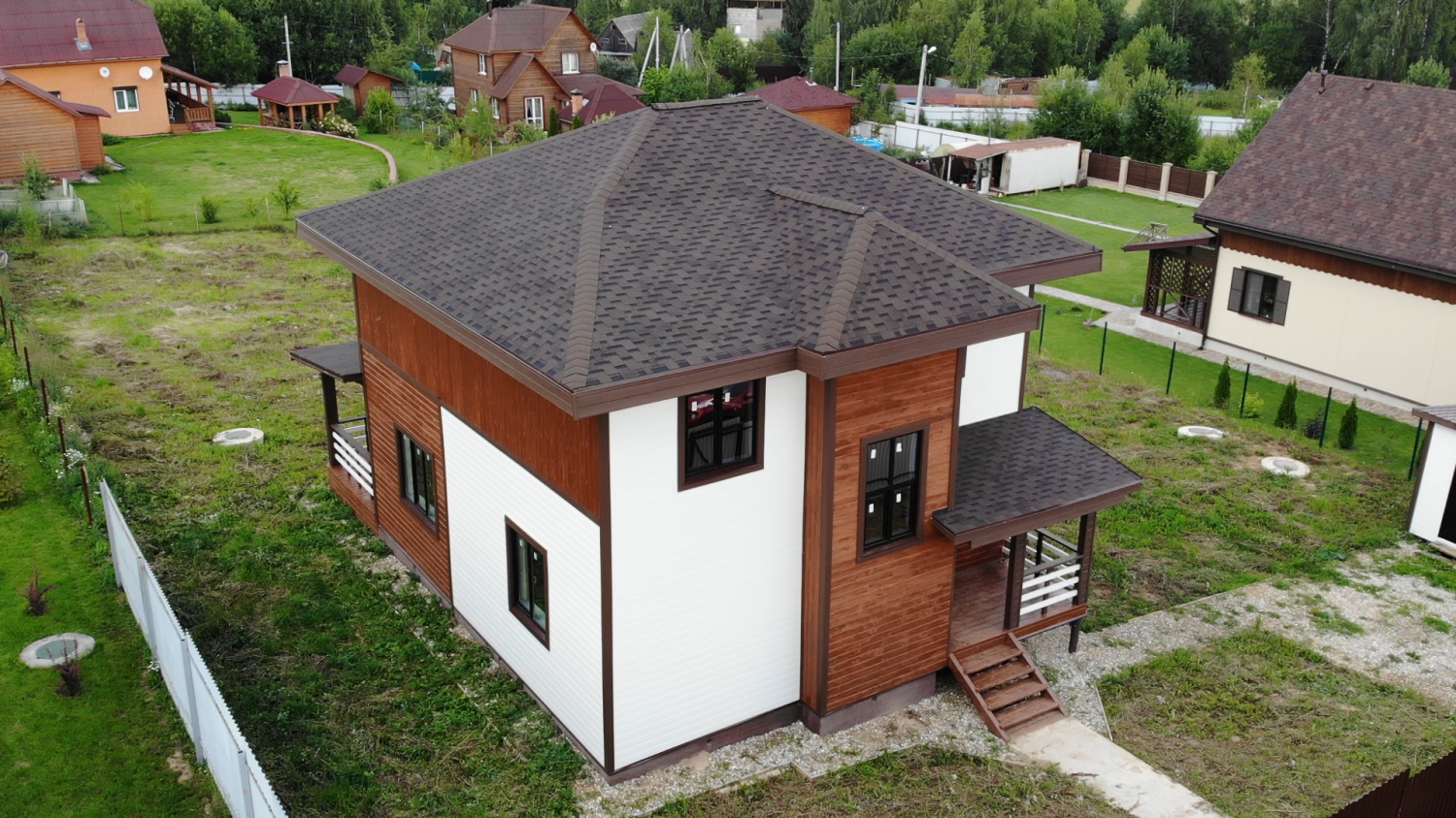
This is the house for sale in the hell of a nice community near....Mashkov Lake near Moscow (no, not Moscow, Idaho), 75 (47 miles) kilometers from the Red Square, near highways, beautiful established community with school, stores, the works. The house is on almost half-acre of land, has the area of 190 sq.meters or around 2050 square feet. It is on sale for R5.8 Million, that is, converting directly to USD, R5.8 million/62.2 = $93, 247. 

As you can see, if I would have been American economist I would immediately try: 

1. To find rough equivalent of this house in the United States around the city with such massive gravitas which could at least remotely compare to that of Moscow. Let's try in D.C. suburbs, right? The only thing remotely comparable to this house in Russia I found at Virginia Beach, VA.
2. As you can see, this house is 4.5 times more expensive than the Russian one, and it is 154 miles (as crow flies) from the US Capital. As you may expected, driving highways will be even longer distance. 

So, let us calculate GDP created by building these two houses in Russia and in US. Right! As you may have guessed it already, the United States created 4.5 times more GDP than Russia by building comparable house in a place which, let's be frank, is not exactly Moscow. Mind you, that Russia builds all kinds of real estate, from apartments to houses, like there is no tomorrow. In fact, the house like that near Moscow, near Krasnoyarsk or Voronezh would cost you less, much less. While in the United States for $93,000 you can buy, even in affordable Spokane, WA, this:
What a lovely charmingly decrepit piece of...history. Here is how PPP (Purchase Power Parity) GDP works, or, rather confuses most Western think-tank free-loaders who do not understand that most of what they know about the world outside is a baloney or a caricature. Like the fact that China's real middle class which has incomes comparable to that of the average US income is larger than the whole population of the United States. That is a good hint. In the end, for the same $439,900 in Virginia Beach, VA, one can always buy this IN Moscow:
And enjoy life on a full acre of nature with around 6,000 square feet of living space. Mind you, you will still have money left to not only furnish this thing but to host a huge housewarming party. I am sure if you are on the extravagant side, there will be money left on strippers too, good ones.

Now, can you scale down, or scale up, Russia's and American economies? Difficult still but it shows you, at least, what all those proverbial $22 Trillion of the US GDP are worth. Not as much as you may have thought before. Nor the argument that Russians do not earn as much is entirely valid. Yes, many Russians do not earn as much and that is ongoing problem, but, say, R60,000 which roughly converts into $965, gets you pretty comfortable living practically everywhere in Russia bar some places like Moscow or Sochi, especially if you own you apartment--very many Russians do and by own I mean OWN, not paying mortgage. There is a lot of what is going into those economic considerations. But it has to be understood today that nominal numbers in USD are absolutely meaningless and, in fact, dangerous because they create a false sense of confidence. But then, there is the other factor--a suppressed complex of inferiority. Shanghai skyline today can outshine anything out there, while many people from Western world, who partook in Western propaganda, upon ending up as tourists in Moscow, St. Pete, Sochi or any other major Russian city and cultural center are often subjected to a cultural shock and severe cognitive dissonance. Why do you think Moscow won tourist Oscar this year?  

And then, of course, comes this ever important factor--as Patrick Armstrong calls it--Russia is a full service economy, she produces literally everything from socks and shoes to refrigerators, space ships, cars, TV sets and advanced diagnostic medical systems. And, of course, Russia produces weapons, very advanced weapons and at least some people are beginning to get the message:
Russian procurement dwarfs that of most European powers combined. Beyond delivering large quantities of weaponry for today’s forces, Russia’s scientists and research institutes are far along in development of hypersonic weapons, such as Tsirkon and Avangard, along with next-generation air defense systems like S-500. This volume of procurement and research and development should not be possible with a military budget ostensibly the same size as the United Kingdom’s. When theory checks in with practice, the problem with the approaches that return such answers is plain for anyone to see.
But you read me for the last five years, didn't you (wink, wink)? Such admissions are extremely important since infuse a much needed cold fresh air of reality into the stale atmosphere of the Western echo-chamber of the military-political analysis wrought with risks of at some point of time BSing policy-makers into the suicidal belief of the invincibility of the American military which may start a war resulting in catastrophic material and reputational losses for NATO forces and thus creating conditions for dangerous "saving face" escalation to a nuclear threshold. THIS must be avoided at all costs and giving Western policy-makers more realistic impression about what they are dealing with in Russia is a good start for finding peaceful arrangements in this new multi polar world. In the end, Kofman and Connolly admit:
Russian military expenditure, and as a consequence the potential for Russia to sustain its military power, is much more durable and less prone to fluctuations than it might appear. The implication is that even at its current anemic rate of economic growth, Russia is likely to be able to sustain a considerable level of military expenditure, posing an enduring challenge to the United States for the foreseeable decades. While ours is an exploratory analysis, it suggests that Russian defense spending is not prone to wild swings, nor has it been dramatically affected by changes in oil prices or U.S. sanctions. Given the disparity in national budget allocations, even as European allies increase their defense spending, Moscow is not going to struggle in keeping pace. 
Their piece is a good indicator of Kofman doing at least some homework, unlike it was earlier, when I criticized Kofman, and that is a movement in a right direction. Russia doesn't need to be loved or appreciated, Russians already made their civilizational choice, Russia needs some overly hot-shots in the West to get a shot of the reality for avoiding the confrontation in which the West cannot win militarily. After all, Russia's military history speaks for itself. But do not forget, however, that IMF (which is run by the US) doesn't even include Russia into the list of a countries with Advanced Economies, while Lithuania and San-Marino are there. Good grief.

P.S. I thank the guys from Colonel Lang's forum who pointed me to this piece by Kofman and Connolly. 

Saturday, July 6, 2019

Short Response To Michael Kofman.

Quote by Michael Kofman of Center for Naval Analysis:
Here, Kofman uses false equivalency and misses the point completely. Here are few things he misses:

1. PAK-FA has an official title and is known as SU-57 and is in series production, with the contract for first 76 aircraft signed few days ago;

2. Being Low Observable while boasting outstanding classic and modern, cutting edge, combat capabilities and performance beyond "Stealth" feature, such as SU-57 has, and having a flying embarrassment, aka F-35, built around primarily LO in radio diapason is not the same. Evidently Kofman does not recognize this crucial difference;

3. Kofman also fails to recognize the fact that in any potential NATO (USA)-Russia conflict, US "Stealth" aircraft would fly against Russia's Air Defense not against American one and here the capability abyss separating the two can not be larger. Kofman, as a "military analyst" should know that;

4. I omit here what I write non-stop about: modern air-defense signal processing and sensor fusion removes most, grossly overstated to start with, advantages of LO in a EW and sensor dense environment of the military peer. In the end, it is known fact that depending on the conditions even SU-35's Irbis radar "sees" F-22 at the ranges of up to 90 kilometers;

5. Finally, it is not a good practice for analyst to defer to the potential enemy, such as Russia, in terms of what she is doing and use it for propaganda, or self-medicating (most likely), purposes. In the end Israeli Air Force still cannot coherently explain what kind of bird damaged IAF's F-35 in Syria, same as why IAF prefers to launch at Syria (allegedly Iranian) targets from the international airspace. 

Moreover, ignoring a dramatic difference between the use of air power in Russia and the United States, especially projected against the background of radical doctrinal differences, is hardly a competent idea, unless, of course, it is used for entertainment of amateurs. But then again, for that--there is a rich and vibrant field of Clancyesque military "literature", where such theses, as Kofman advances, belong.