First, keep in mind who those children who keep World Bank's blog are. Second, the US still keeps the edge due to accumulation and retaining its infrastructure from Ike's time--this was an immense investment. But it slowly changes, albeit US infrastructure is still, for now, is not too bad. But then... If you have $100 grand...
This is relatively near Moscow, mind you... Relatively. If you ask me--I can tolerate Moscow for about 10 days, same goes for St.Petersburg. After that I begin to miss my... Pacific Northwest, ocean, mountains, country fried steak (well, that's important too, you know) and the breeze...
I have a huge respect for sea/ocean. I have to, it is my education and some of the most important life experiences, some of them seeing my friends die, or me and my ship almost going down in storm of immense power, being formative for my outlook on life. I respect nature in general. I also was "blessed" of being in major earthquakes--so, respect for nature in general comes with the territory. Living in the Pacific Northwest--a stunningly beautiful and dangerous place--it is only natural to expect a "big one", meaning earthquake, and a tsunami, which will come. I recall when buying a house I told to our real estate agent that the house shouldn't be on the coastline, or, if close to it, it should be at the elevation of at least 60-70 feet. At least. The realtor was disappointed, he just happened to have one house "literally within a quarter of a mile from the beach" and thought that this was such a find. We flatly rejected the offer, however within our means.
Being almost 2 miles from the beach, the elevation of our house being almost 40 meters above the ocean level, we, at least, have some chances of surviving a real major tsunami which can reach a stunning height of 35-40 meters while cresting at the shoreline. There is no question of if, it is merely a question of when, as Japan learned it a hard way in 2011. I didn't follow the price dynamics of the beach houses in our state but I am sure they are still sought out properties, which, for any normal person who is self-aware are extremely undesirable because of:
So, normal people are asking questions why this moron still says that this is "a great place to live". Human idiocy, obviously, and ignorance are untreatable. Once they are supplemented with large disposable incomes, being a fool may even become fashionable.
There is nothing "surprising" about ocean. Never was, and if one thinks that the world ocean exists for our pleasure only--they better get a real assessment of their own "significance", especially relative to what not just wind-swell of huge waves, but real tsunamis can do.
And how unprepared and unaware (a euphemism for human stupidity and vanity) can people be? Here is a classic case of "ah, this is the first time it happened". No shit.
You play stupid games, you win stupid prizes. The reason I concentrated on that is because in a sense these "real estate" mishaps, or, rather, mindless fuck-ups are parables for human arrogance and unawareness in a face of forces many of which are beyond our control. For many, building house on the ocean beaches is tantamount to playing Russian Roulette with their own lives and the lives of those around them. I recall 12-13 or so years ago sitting in the house of one of my acquaintances. It was a nice house and it was on the beach in "literally 10 feet" from the water, as proud owner of the house wanted to emphasize. I kept silent, although she admitted that during the storm it floods somewhat. My question, never voiced, was--how much time you and your family will have to escape when even anticipated every year tsunami, which is a euphemism for flooding, of merely 10 meters comes. And it WILL come.
One of my favorite movies, due to excellent duo of Michael Shannon and Jessica Chastain, is Take Shelter. The ending is what makes it a gem.
And makes us ask ourselves a question if we, far from being paranoid, did all we could to be ready for tsunami when it comes, and it is coming. You don't want to find yourself as Samantha (Jessica Chastain) having only one thing to say seeing a wall of water rolling towards you--OK. It is not OK and it is good, from time to time, to give oneself a slap in the face to recognize that also we are very small and insignificant in a larger scheme of things, it doesn't mean that we should be stupid and we have a say in what reality we want to reside.
It seems this GDP question does not want to die. First, out of the blue Michael Kofman and Richard Connolly of Center for Naval Analysis (CNA) write this:
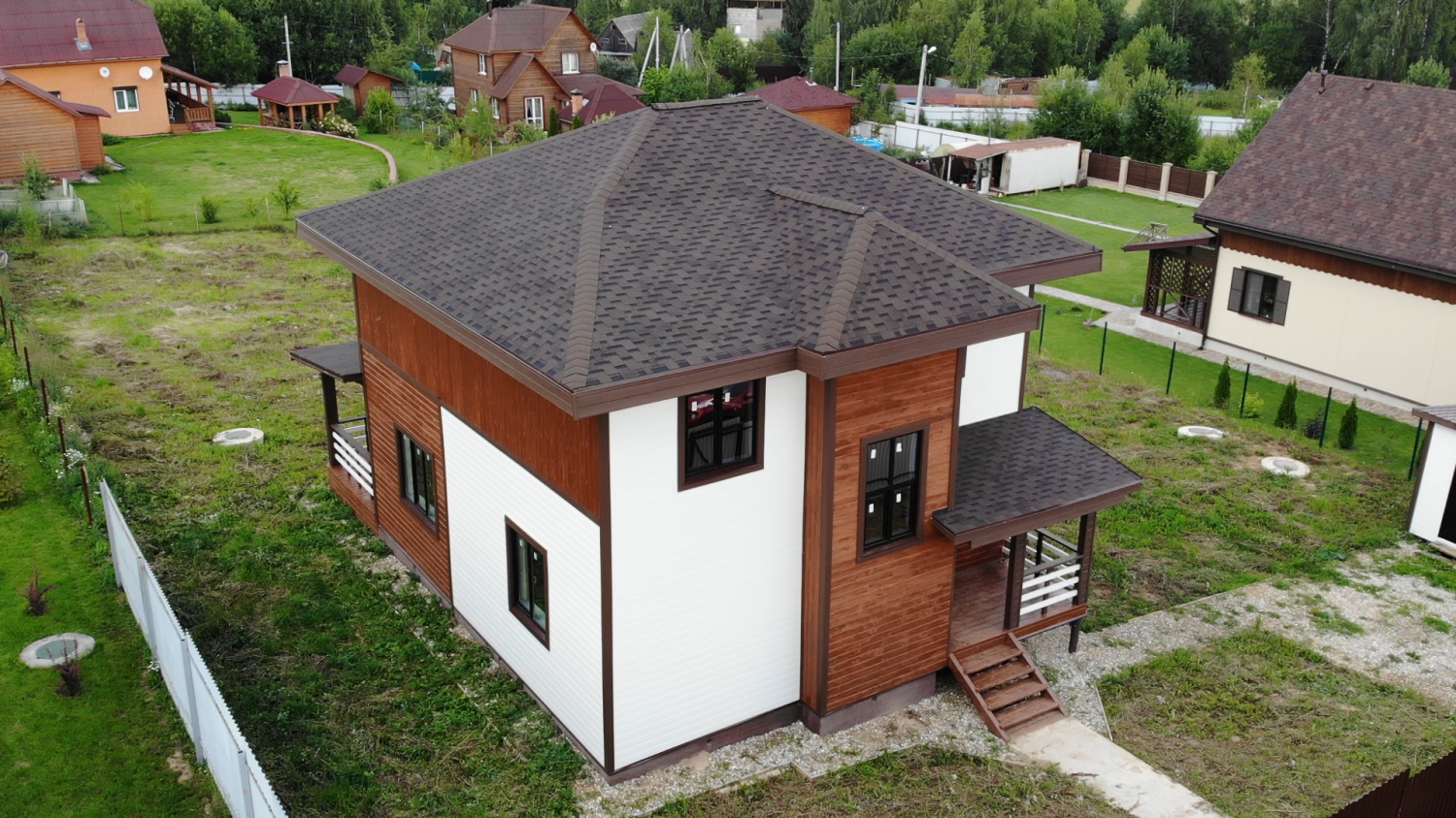
Well, it seems they read my books at CNA. In fact, I would dare to say that Russia's economy is, actually, fifth largest economy in the world. How so? Here is a demonstration in the most profound way--yes, I am not going to be talking about military hardware, where Russia gets a gigantic bang for a buck--by giving visuals for comparison of things people do not need special skills to understand. Here is one:
As you can see, if I would have been American economist I would immediately try:
1. To find rough equivalent of this house in the United States around the city with such massive gravitas which could at least remotely compare to that of Moscow. Let's try in D.C. suburbs, right? The only thing remotely comparable to this house in Russia I found at Virginia Beach, VA.
2. As you can see, this house is 4.5 times more expensive than the Russian one, and it is 154 miles (as crow flies) from the US Capital. As you may expected, driving highways will be even longer distance.
So, let us calculate GDP created by building these two houses in Russia and in US. Right! As you may have guessed it already, the United States created 4.5 times more GDP than Russia by building comparable house in a place which, let's be frank, is not exactly Moscow. Mind you, that Russia builds all kinds of real estate, from apartments to houses, like there is no tomorrow. In fact, the house like that near Moscow, near Krasnoyarsk or Voronezh would cost you less, much less. While in the United States for $93,000 you can buy, even in affordable Spokane, WA, this:
What a lovely charmingly decrepit piece of...history. Here is how PPP (Purchase Power Parity) GDP works, or, rather confuses most Western think-tank free-loaders who do not understand that most of what they know about the world outside is a baloney or a caricature. Like the fact that China's real middle class which has incomes comparable to that of the average US income is larger than the whole population of the United States. That is a good hint. In the end, for the same $439,900 in Virginia Beach, VA, one can always buy this IN Moscow:
And enjoy life on a full acre of nature with around 6,000 square feet of living space. Mind you, you will still have money left to not only furnish this thing but to host a huge housewarming party. I am sure if you are on the extravagant side, there will be money left on strippers too, good ones.
Now, can you scale down, or scale up, Russia's and American economies? Difficult still but it shows you, at least, what all those proverbial $22 Trillion of the US GDP are worth. Not as much as you may have thought before. Nor the argument that Russians do not earn as much is entirely valid. Yes, many Russians do not earn as much and that is ongoing problem, but, say, R60,000 which roughly converts into $965, gets you pretty comfortable living practically everywhere in Russia bar some places like Moscow or Sochi, especially if you own you apartment--very many Russians do and by own I mean OWN, not paying mortgage. There is a lot of what is going into those economic considerations. But it has to be understood today that nominal numbers in USD are absolutely meaningless and, in fact, dangerous because they create a false sense of confidence. But then, there is the other factor--a suppressed complex of inferiority. Shanghai skyline today can outshine anything out there, while many people from Western world, who partook in Western propaganda, upon ending up as tourists in Moscow, St. Pete, Sochi or any other major Russian city and cultural center are often subjected to a cultural shock and severe cognitive dissonance. Why do you think Moscow won tourist Oscar this year?
And then, of course, comes this ever important factor--as Patrick Armstrong calls it--Russia is a full service economy, she produces literally everything from socks and shoes to refrigerators, space ships, cars, TV sets and advanced diagnostic medical systems. And, of course, Russia produces weapons, very advanced weapons and at least some people are beginning to get the message:
Russian procurement dwarfs that of most European powers combined. Beyond
delivering large quantities of weaponry for today’s forces, Russia’s
scientists and research institutes are far along in development of
hypersonic weapons, such as Tsirkon and Avangard, along with next-generation air defense systems like S-500.
This volume of procurement and research and development should not be
possible with a military budget ostensibly the same size as the United
Kingdom’s. When theory checks in with practice, the problem with the
approaches that return such answers is plain for anyone to see.
But you read me for the last five years, didn't you (wink, wink)? Such admissions are extremely important since infuse a much needed cold fresh air of reality into the stale atmosphere of the Western echo-chamber of the military-political analysis wrought with risks of at some point of time BSing policy-makers into the suicidal belief of the invincibility of the American military which may start a war resulting in catastrophic material and reputational losses for NATO forces and thus creating conditions for dangerous "saving face" escalation to a nuclear threshold. THIS must be avoided at all costs and giving Western policy-makers more realistic impression about what they are dealing with in Russia is a good start for finding peaceful arrangements in this new multi polar world. In the end, Kofman and Connolly admit:
Russian military expenditure, and as a consequence the potential for
Russia to sustain its military power, is much more durable and less
prone to fluctuations than it might appear. The implication is that even
at its current anemic rate of economic growth, Russia is likely to be
able to sustain a considerable level of military expenditure, posing an
enduring challenge to the United States for the foreseeable decades.
While ours is an exploratory analysis, it suggests that Russian defense
spending is not prone to wild swings, nor has it been dramatically
affected by changes in oil prices or U.S. sanctions. Given the disparity
in national budget allocations, even as European allies increase their
defense spending, Moscow is not going to struggle in keeping pace.
Their piece is a good indicator of Kofman doing at least some homework, unlike it was earlier, when I criticized Kofman, and that is a movement in a right direction. Russia doesn't need to be loved or appreciated, Russians already made their civilizational choice, Russia needs some overly hot-shots in the West to get a shot of the reality for avoiding the confrontation in which the West cannot win militarily. After all, Russia's military history speaks for itself. But do not forget, however, that IMF (which is run by the US) doesn't even include Russia into the list of a countries with Advanced Economies, while Lithuania and San-Marino are there. Good grief.
P.S. I thank the guys from Colonel Lang's forum who pointed me to this piece by Kofman and Connolly.