Showing posts with label First Island Chain. Show all posts

Wednesday, July 15, 2020

And So It Starts.

As was expected, the US decided that she has resources to challenge China.  Including First island Chain, my oh my. 
WASHINGTON/BEIJING (Reuters) - The United States on Monday rejected China's claims to offshore resources in most of the South China Sea, drawing criticism from China which said the U.S. position raised tension in the region, highlighting an increasingly testy relationship. China has offered no coherent legal basis for its ambitions in the South China Sea and for years has been using intimidation against other Southeast Asian coastal states, U.S. Secretary of State Mike Pompeo said in a statement. "We are making clear: Beijing’s claims to offshore resources across most of the South China Sea are completely unlawful, as is its campaign of bullying to control them," said Pompeo, a prominent China hawk within the Trump administration. The United States has long opposed China's expansive territorial claims on the South China Sea, sending warships regularly through the strategic waterway to demonstrate freedom of navigation there. Monday's comments reflect a harsher tone. "The world will not allow Beijing to treat the South China Sea as its maritime empire," Pompeo said.
Immediately, what strikes one is Pompeo's attempt to internationalize the conflict. I will omit now legal issues here, I am interested in the purely operational aspect of this whole South-China Sea thing. US has only one way of challenging China for real, if, God forbids, this will come to blows--these are Indian Ocean's SLOCs through which much of the resources from Africa and Middle East reach China by sea. I discussed it in length many times. First Island Chain, or near it, is a completely different game because China does have what it takes to "close" the area. As the article states:
"This is basically the first time we have called it illegitimate," Chris Johnson, an analyst with the Center for Strategic and International Studies, said of Pompeo's statement. "It's fine to put out a statement, but what you going to do about it?"
Exactly, that is the whole point--sending two CBGs in the area is an old propaganda trick, considering the fact that apart from old inventory PLA Air Force has a rather impressive inventory of around 600 thoroughly modern and even very advanced combat aircraft with a 100 of them being fully Russian-built Su-30 and Su-35. Once one adds China's indigenous and Russian-built AD systems such as S-300 and S-400 one has to ask a question, do those two CBGs feel lucky? Once the factor of supersonic and hyper-sonic anti-shipping missiles is taken in consideration, Pompeo's attempts to internationalize the conflict begin to make sense for the American side. 

The whole thing is not about "freedom of navigation" per se, it is about waking up to the reality that the US being squeezed out of Eurasia and that it realistically has no resources to do anything about it other than threaten, make grandiose statements and impose sanctions. Militarily the US has no chance against China unless it can "compartmentalize" possible clashes on the periphery of the area and declare possible tactical success a strategic victory for domestic consumption. Meanwhile the US slaps yet another round of sanctions on Nord Stream 2 (and Turkstream) and it is becoming rather stale by now:
These are desperate moves by the US, especially when one considers an impressive dynamics of pipe-lines' development between Russia and China, as NS 2 spokesperson noted:
Efforts to obstruct the project "reflect a clear disregard for the interests of European households and industries, who will pay billions more for gas if this pipeline is not built," said spokesperson Steffen Hartmann.
Can we please drop this BS, when was the last time the US "regarded" anything other than own, and even then doing it grossly incompetently,  interests. In the same time, I do not have any sympathy for Europe--you asked for it, you got it. The US will, effectively, subvert cowardly Europeans and this economically collapsing Atlantic "union" will eat itself alive, until it hits the state of a third world. As one Russian energy expert noted few days ago--Europe is not a priority anymore for Russian energy. Back to China, the only hope for the United States in a clash with China is the fact that US Navy, for all its major issues, still, for now, remains operationally in a different league with China and that may be the only factor which realistically plays for the United States under present circumstances. In the end, China's shipbuilding industry dwarfs that of the US and is extremely well financed. Russia will take care of China's energy and, who knows, even targeting data. 

In related news, Admiral Kasatonov got its acceptance papers signed today, the official commissioning to the fleet (raising of the flag) is planned for July 21 (in Russian). Admiral Golovko is next in line. Mind you--all these ships carry 3M22 Zircon. So, all in all, things progress in a very positive direction for the Russian Navy. Considering the state self-proclaimed hegemon is in nowadays--additional safety measures cannot come soon enough. 

Sunday, September 15, 2019

SSKs In... US Navy?

I stumbled on that through Yahoo News yesterday. As you may know I do not read The National Interest--it is a tabloid dumpster for fanboys and its military sections are 99% a masturbation to shiny military toys by people who have no clue. The OTHER 1%, however, is represented by such people of scale as Colonels Daniel Davies, Douglas Macgregor or Professor James Holmes. So, I saw James Holmes' name at Yahoo and I went for it.  Holmes opened with a broadside:
I never, obviously, served in US Navy and I know of its internal kitchen from open sources only, such as memoirs and other texts. But I always remember Elmo Zumwalt quoting Rickover that:"The United States Navy got used to traveling first class."(c) In Rick's words "first class" meant large and very large surface combatants and nuclear propulsion. That's the institutional culture--US Navy likes only nuclear-driven subs. And it kinda makes sense once one considers the fact that the United States is an imperial power and she likes to sail anywhere, everywhere to "project" herself. Nuclear powered subs are perfectly suited for this strategic and operational posture since they provide for long-duration, thus translating into very long distances, clandestine operations against enemies, which all, as we know, dream of denying America her freedoms. Yet, James Holmes calls for SSKs. Hm. Holmes speaks in the broadside yet again and pronounces this "M" word, which many in the US are reluctant to say when speaking about actual war (Holmes wants to fight both China and Russia):
...the nuclear mafia within the silent service—the dominant faction among submariners, it must be said—will produce statistics beyond counting to prove that nuclear-powered craft are superior to their conventional brethren. And they will be right—by every measure except what matters. Namely, winning. The SSK is the right tool for the job provided it’s deployed at the right place on the map in the right manner to achieve maximum effect. 
Ah, that's warmer. And should I have been American exceptionalist, which, of course, I am not, I would have taken this Holmes' argument to heart, especially since Holmes, almost verbatim, repeats Stansfield  Turner's operational truism brilliantly formulated by him in 1976 in his interview to Christian Science Monitor, titled Who has The Best Navy. I will help you to recall that:
Pay attention to Turner's succinct observation about the number of keels. He delivers it in the clearest way possible: It is the capacity to do what might be decisive in some particular situation. And the first issue with that, if to imagine some scenario of the battle, say, for Senkakus in which hypothetical American-built (or bought) SSKs will take part is this: what kind of weapons will they carry? Holmes describes his scenario in next terms:
Combining submarines with marine geography amplifies their efficacy at sea denial. Array diesel boats along, say, Asia’s first island chain in concert with unmanned combat vehicles, sea mines, surface patrol craft, warplanes, and missile-armed ground troops and you’ve erected a formidable barrier to passage between the China seas and Western Pacific. That’s a barrier that Beijing will think twice about flouting. You don’t need an SSN to stand picket duty, and in fact using it thus amounts to overkill. Nuclear attack boats have sea-control missions to perform on the open ocean. Used imaginatively, inexpensive diesel subs can reinforce conventional deterrence and free up precious SSNs for more important things, all without busting the shipbuilding budget. That’s the reciprocal of producing über-pricey SSBNs to reinforce nuclear deterrence. How’s that for cosmic balance? 
Well, it is all fine and dandy (on the paper), but even the brief look at the map (First Island Chain) reveals something significant:
You know what it is? Right--ranges, aka distances. First Island Chain is entirely within the range of a variety of Chinese deadly anti-shipping weapon systems which, in case of real war, God forbids, have a complete capability to shut down approaches to this very Island Chain and deny hypothetical US Navy SSKs what they would need desperately--forces supporting their operations. You may have guessed it already, such forces are US Navy's Carrier Battle Groups and their airwings. No support from them, any SSK operating at those ranges becomes a prey for ASW patrol aviation and surface groups which follow. This is, of course, not to mention the tempo of China buying those pesky S-400s and SU-35s from Russia. 

What are, then, the probabilities of hypothetical salvos of subsonic anti-shipping missiles launched from hypothetical US SSKs against PLAN's surface groups to provide a number of leakers is for a separate discussion but I doubt those to be effective against modern naval AD systems. While I totally understand where James Holmes is coming from and I know his bad feelings towards PLAN and namely Admiral Lou, I, honestly, do not see, from what little I know about US Navy, how the habit of "traveling first class" could be kicked, especially in the times of massive stock buybacks and strict bottom lines for CEOs and shareholders. After all, I think, Congress is also on it. But I repeat myself.       

Tuesday, February 21, 2017

A2/AD Business.

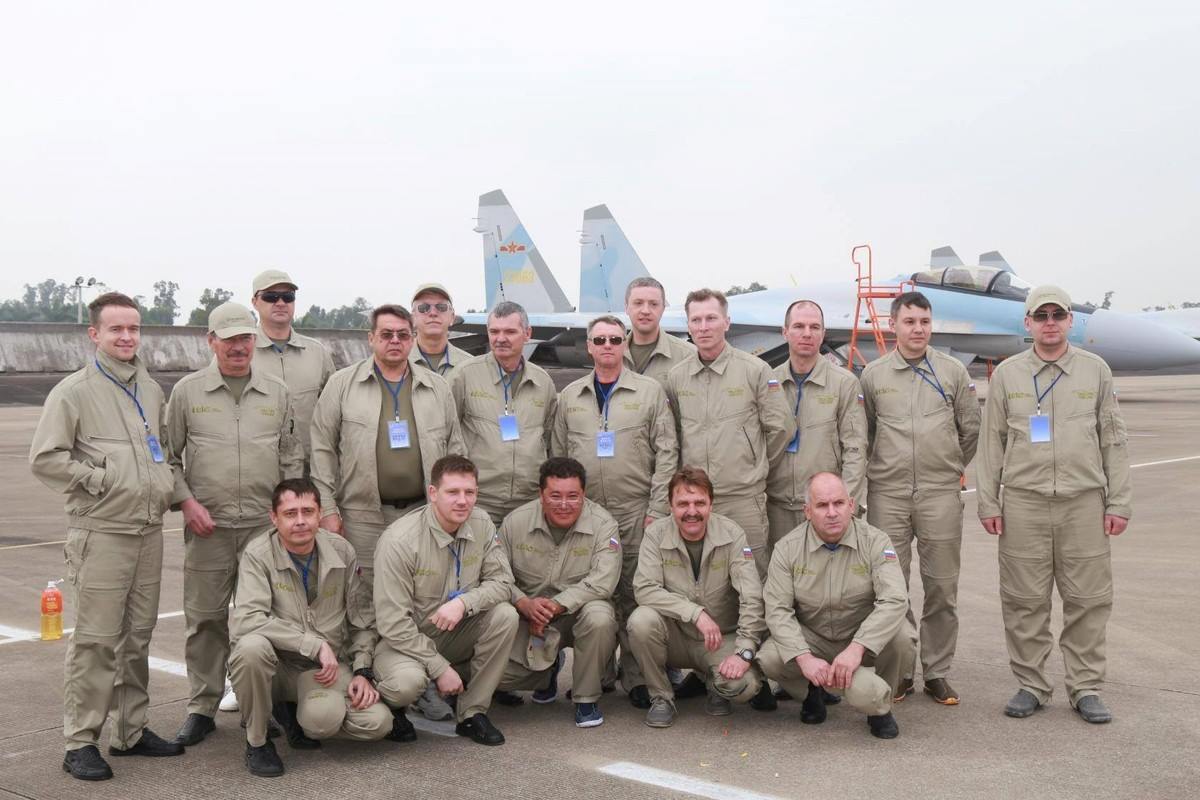
An interesting development today. Evidently, Russia and China signed the contract for a delivery of Russian-made anti-shipping missiles to China. It is a rather significant development. At this time it is not known which missiles will be delivered to China and, most importantly, in what "configuration": export, less capable version, or for internal, much more capable, Russian use. If to consider the fact that Russia started deliveries of  SU-35 in their original (that is what rumors say so far), "Russian" configuration,
  
Here is the first "Chinese" SU-35 with Russian transfer team.
then it is totally reasonable to assume that it is probable that Russian anti-ship missiles (complexes) will be of a "domestic" configuration. In this case we may conclude that if those missiles are of a Kalibr family or P-800 Onyx, their ranges will be up to 600 kilometers (around 320 nautical miles), not twice shorter as it is the case with export versions. This, if my assumptions are correct (I could be wrong, of course--time will tell), will have a major effect on how China may approach her interests in the South China Sea and defense of her littoral--a proverbial A2/AD. In this case China will be able to achieve almost a full "coverage", an overlapped missile obstacle course, along most of her First Island Chain.  
  
This will make the life of the US Navy surface ships rather exciting if someone in D.C. (and even with new US Administration it is not precluded) makes a decision to "project power" against Chinese interests. I omit here the legal and moral aspect of Chinese claims--I am not well versed in the legal details of this whole situation--but it is very clear that missile technologies play and will continue to play an increasingly large role in formation of naval strategies. In the end, a naval truism "a ship's a fool to fight a fort" is as relevant as ever, especially if one considers "a fort" having a capable Air Force.