Showing posts with label A2/AD. Show all posts

Friday, November 8, 2019

Some Technological Issues For The Russian Navy.

No, I am not talking about those well-known issues of re-tooling and modernization of wharves and issues related to that. No. I am talking about the issue of a fleet facing a completely new technological reality, aka Real Revolution in Military Affairs, and being forced to adapt literally on the run with all that follows, including rewriting its own fighting doctrine, tactics and reviewing its force structure. Enter this damn 3M22 Zircon and Marshal Shaposhnikov, now officially, a destroyer (instead of being Large ASW Ship in his previous life) and long time "reservist" K-132 Irkutsk of Oscar-II (project 949A) SSGN. The hint with Shaposhnikov was obvious. Compare this picture from from 2017:


With this, from October 2019. 

See the difference? It is huge, Shaposhnikov has two large technological holes created behind her, now lone, 100-mm gun and those holes are, obviously, for UKSK (3C14) VLS. Now, it has been revealed that apart from seemingly obvious mix of Kalibr's 3M14-3M54-91RT family missiles, Shaposhnikov WILL carry, drum roll, 3M22 Zircon.   
Translation: Large ASW Ship Marshal Shaposhnikov and submarine Irkutsk will be able to use Zircon missiles. Submarine Irkutsk, specifically, is being modernized to project 949AM level.

This, obviously, explains a "delay", or rather "progression" of modernization plans for Shaposhnikov. As for Oscars, their Zirconization was obvious from the git go. In fact, Russian Navy's Zirconization is now an established fact. These ships are for Russia's Pacific Fleet, which is in desperate need for modernization (it is ongoing as I type this) and is getting to be (back) a key stability factor both in nuclear deterrence and in Asia by conventional means. Just imagine one of these things stuffed with Zirkons and Onyxes to the hilt hanging out somewhere under the cover of Russian ASW and fighter-interceptor aviation, and latest SSKs.

See the possibilities now? 
TOOD
This is not anymore A2/AD (Anti-Access/Area Denial) "bubble", this is (may I copyright this?) Theater Of Operations Denial (TOOD) doctrine in action. But then again, traditional geopolitics as it was conceived in times of steam and ironclads is dead as are dead old fighting naval doctrines. But I warned about it years ago, didn't I? Here is one of such warnings. 
I propose, that the development of these kinds of ships (boats) and of the missile complexes they carry is completely new, paradigm-shifting, development but before I continue, hopefully during the Labor Day weekend, I want to make some important points.

Disclaimer: I know, there are armies of internet "warriors" who browse world-wide-web constantly in search of the virtual fights and who do not understand that behind all this fancy military lingo is the reality of the combat with blood, suffering, torn limbs, horrible burns, torturous deaths. I am terrified by the possibility of Russia and US going to war, but I am also terrified by the blood-thirst of all kinds of patriots who are ready to fight somebody, while sitting in the chairs as I am doing now.

I have a profound respect to US Navy, its glorious history and many people, who served and still serve there, some of those people are my closest and dearest friends and they are not war mongers. However, the continuation of the posts on mosquito fleet, inevitably, will lead to a description of the scenario which is in the air, but, hopefully is not becoming a reality, in which US Navy will try to test Russia's littoral defenses and this scenario will, certainly, involve participation on a massive scale of Russian Navy's mosquito capabilities, which, as some already guessed, will be covered in the air and from beneath by necessary means which, in Russian language, are called Naryad Sil  (Required Force--what is Naryad and why it is called as such, in English it means dressed, is a separate discussion;-)   Meanwhile, I leave you with the question of why late Admiral Cebrowsky's (hell, try Zumwalt and his Project 60) ideas of Street Fighter will not work in US.
I don't think I need to add anything here. 

Update: I need to add something here, after all. LOL. Zvezda TV already ran news video on this whole issue. In Russian. Pay attention to update (modernization) of good ol' pr. 1234 with 16 X-35 Uran anti-shipping missiles. 

Thursday, March 28, 2019

A Very Interesting Moment With Brahmos.

One of those A-ha (no, not the band) moments which clarifies a lot.  As TASS reports (in Russian), Russian co-director of Russian-Indian Joint Venture Brahmos speaking to reporters at Malaysia's LIMA 2019 military exhibition, stated that in the nearest future Brahmos missile (which is a version of Russia's P-800 Onyx missile) after some modifications will reach speeds of M=4.5-5.0, thus making it effectively a hyper-sonic weapon which, as you may have guessed it already, have the most serious operational and strategic ramifications. 

Rumor has it that Russia's 3M22 Zircon capable of M=9 is built on Onyx's design, but it is one thing to have a new missile such as Zircon, totally another--to be able to upgrade own whole "fleet" of missiles from simply deadly (M=3) to uninterceptable. It is also clear that laser weapons will not become a reliable and effective counter-measure for such a threat any time soon, and I mean not soon at all. In the end, issues of attenuation and counter-measures from missiles themselves (from rotating frames, to reflective surfaces, among others) are more than sufficient to keep laser weapons as a niche weapon primarily against slow unprotected targets, such as drones, for a very long time. But my point here is this (I write about it in my new book)--what about proliferation? 

I think proliferation of a hyper-sonic weapons is inevitable, both as a military product and as a geopolitical one. The demand for it is huge because it means safety of own littorals from any kind of forces and threats. There will be many, in addition to already huge number, statements, declarations and documents about A2/AD "bubbles" and how to puncture them, but without radical transformation of the surface fleets away from what they are today and introduction of real weapons systems capable of stopping hyper-sonic missiles tens kilometers away from ships, all this will remain an operational and strategic (and doctrinal) pseudo-intellectual masturbation for all kinds of military "analysts" for a long time. Think for a second what happens even if one "blows" M=9 or even M=5 missile in 2-3 kilometers from own ship? How about, in the best case scenario, a shower of the hyper-sonic fragments still capable to disable the ship? Questions, questions....  

Thursday, June 8, 2017

Four Oscars To Be Modernized For Russia's Pacific Fleet.

As Igor Korotchenko's blog reports (in Russian), it is official--4 Russia's Pacific Fleet SSGNs of Project 949A  (aka Oscar-II) will be modernized to carry Kalibr family missiles. 72 of them. The announcement was made by Deputy Defense Minister Yuri Borisov. One of the Pacific Fleet Oscars, Irkutsk, is already undergoing modernization and is planned to re-join the fleet in 2021, three others should be modernized by 2025. 

Omsk

It remains to be seen how many of newest Yasen-class (Project 885) SSGNs will join Pacific Fleet or when all 6 of newest missile carrying SSKs will do the same, but judging by the speed with which first six of those have been completed for the Black Sea Fleet, 2025 seems to be a realistic date for completion. Of course, as it is always the case with Russia, things may and, most likely, will change somewhat but it seems that somebody finally started paying attention to the Pacific Fleet which was left to manage with whatever was available to it since the collapse of the Soviet Union. 

Of course, one can not ignore the fact of the two newest SSBNs of the Borey-class (Project 955A) Alexandr Nevsky and Vladimir Monomach serving with the Pacific Fleet, but SSBNs are a completely different commodity than attack subs. The same goes for the surface component and here, apart from Marshal Shaposhnikov undergoing modernization, Pacific Fleet is in dire need for new hulls in its surface component. Looks like, the fleet will be getting, starting this June, long-awaited corvettes of Project 20380. So, by 2025, it seems, Pacific Fleet will have a serious submarine force capable to provide for a massive salvo against any threat, as well as "project", if need be (hopefully, not), against anyone's shores in the Pacific Ocean.  It will be very interesting to observe in the nearest future the way the Pacific Fleet will be getting its face lift, and not by the ships and subs only. New Il-38Ns with Novella complex and Mig-31s modernized to BM version, together with new sensors, should provide a very robust A2/AD capability against any combination of threats. 

Tuesday, February 21, 2017

A2/AD Business.

An interesting development today. Evidently, Russia and China signed the contract for a delivery of Russian-made anti-shipping missiles to China. It is a rather significant development. At this time it is not known which missiles will be delivered to China and, most importantly, in what "configuration": export, less capable version, or for internal, much more capable, Russian use. If to consider the fact that Russia started deliveries of  SU-35 in their original (that is what rumors say so far), "Russian" configuration,
  
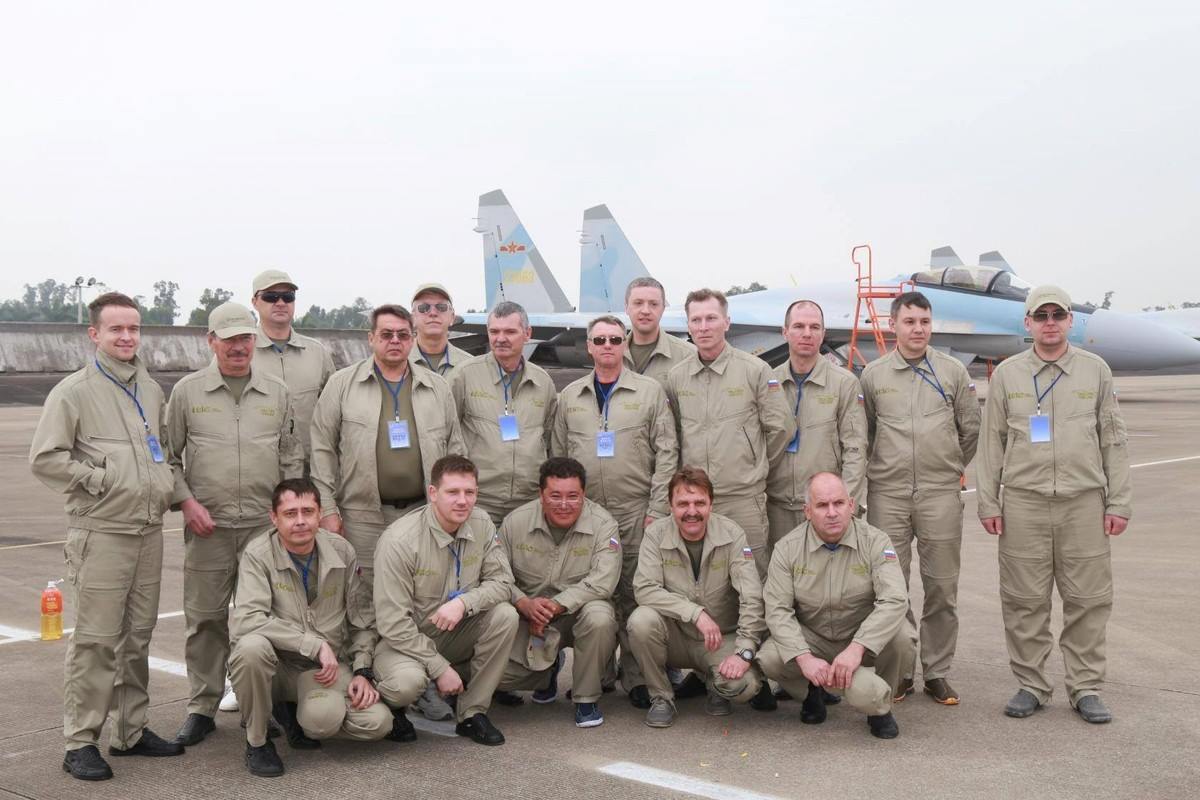
Here is the first "Chinese" SU-35 with Russian transfer team.
then it is totally reasonable to assume that it is probable that Russian anti-ship missiles (complexes) will be of a "domestic" configuration. In this case we may conclude that if those missiles are of a Kalibr family or P-800 Onyx, their ranges will be up to 600 kilometers (around 320 nautical miles), not twice shorter as it is the case with export versions. This, if my assumptions are correct (I could be wrong, of course--time will tell), will have a major effect on how China may approach her interests in the South China Sea and defense of her littoral--a proverbial A2/AD. In this case China will be able to achieve almost a full "coverage", an overlapped missile obstacle course, along most of her First Island Chain.  
  
This will make the life of the US Navy surface ships rather exciting if someone in D.C. (and even with new US Administration it is not precluded) makes a decision to "project power" against Chinese interests. I omit here the legal and moral aspect of Chinese claims--I am not well versed in the legal details of this whole situation--but it is very clear that missile technologies play and will continue to play an increasingly large role in formation of naval strategies. In the end, a naval truism "a ship's a fool to fight a fort" is as relevant as ever, especially if one considers "a fort" having a capable Air Force.   

Tuesday, August 30, 2016

Damned If You Do, Damned If You Don't-I (Military Power, Again).

I do sympathize with US Armed Forces in one very serious respect--being a tool of insane neocon foreign policy and delirious military-political doctrines, US Armed Forces, together with the US as a whole, have sustained some major, to put it mildly, reputational damage as of lately. Arguing about this is really a waste of time since the sheer number of high profile scandals from forcing an ROTC cadets to walk in women's shoes, to naming Navy's tanker after Harvey Milk--the gay rights activist, to actual very serious strategic and operational failures both in Iraq and in Afghanistan (and in Syria), is more than enough to give an impression that things are not going the way they are supposed to go. And they are not, and it is not just the impression.  It is also a very sensitive matter since very many (by far not all, though) in and around US Armed Forces have gotten used to thinking about themselves as omnipotent. As Lt. Colonel Davies succinctly put it:

"In the aftermath of Operation Desert Storm in 1991, there was great celebration in America that the crushing military victory over Saddam Hussein’s Iraq, “kicked the Vietnam syndrome once and for all” and demonstrated the United States was now the world’s sole military superpower. That was no empty bluster. Even Beijing and Moscow were impressed and openly lamented they were militarily inferior. Americans across the board were optimistic and proud. However justified that pride might have been at the time, it quickly mutated into distasteful arrogance. Now, it is an outright danger to the nation."

Fact is, the US military talked itself up so much that at some point it simply stopped being adequate to the qualities and capabilities it claimed to have. Make no mistake, it is still a first class fighting force and is a force which could only be described in terms of a superpower  which US as a whole still remains. For how long? That is a question of questions. 

No force represents American superpowerdom better than her first class and world's most powerful Navy. There is no discussion about it--it is by far the most powerful navy in the world, which also has a glorious battle history and is highly professional. Yet, the same as with the country it represents, it has some very serious operational and technological issues. In layman's lingo--it is not invincible. In the last three years since the start of Ukrainian mayhem number of US high ranked generals, such as Philip Breedlove, claimed that Russia had regular troops in Ukraine fighting alongside "separatists". Did Breedlove know that this was a BS? Hell yes, he knew, he also knew that should Russian Army fight in Ukraine, the war will be over pretty fast. Here he got himself into the classic Damned If You Do, Damned If You Don't situation. You are damned if you lie about Russian Army, thus making yourself look like a fool, you are also damned if you use your own professional background and senses and state that real Russian Army's capabilities are such that it would take about a week to simply wipe Ukrainian Armed Forces out as an organized fighting force. This is a military version of Russophrenia--the enemy must be simultaneously a piece of crap which doesn't even touch the feet of US Armed Forces and be very powerful as to impede or shut down everything what goes under the title of "force projection" as to provide enough cash flow from the holder of the purse to buy new shiny toys.  

Enter current Chief Of Naval Operations Admiral Richardson and his interview to TNI with telling title:

Chief of Naval Operations Richardson: US Aircraft Carriers Can Fight Inside A2/AD Zones

This interview is a classic example of this Damned If You Do, Damned If You Don't principle and it is absolutely not new for modern US Navy--because US Navy is a carrier-centric one. US Navy's large aircraft carriers are magnificent ships, incredible feats of engineering in their own right and they do provide an imposing visuals which easily translate into a clear statement of US global power to project force... that is when we are talking about some third world sh.tholes which have no real navy, no real air-defense, no real air force or, in general, anything that accounts for... drum roll... A2/AD (that is Anti-Access/Area Denial) capabilities. But in US Navy it is damned if you do not have carrier-centric navy, damned if you do, because for a 20+ billion dollars per single Carrier Battle Group you have to find the way to do more than just provide visuals and to bomb with impunity the shit out of such places as Iraq or Afghanistan, and damned if you do since the whole premise of American exceptionalism and superpowerdom goes to hell without carriers and there are very good chances to lose them when facing serious people. Are US CBGs really capable to fight inside REAL A2/AD zones? Here, after we skip the platitude about US Navy leadership's views on A2/AD: "A2/AD—as it is now called—has existed since the dawn of warfare when primitive man was fighting with rocks and spears. Overtime, A2/AD techniques have evolved as technology has improved with ever-greater range and lethality. Rocks and spears eventually gave way to bows and arrows, muskets and cannons. Thus, the advent of long-range anti-ship cruise and ballistic missiles is simply another technological evolution of A2/AD," Admiral Richardson makes a very startling statement:

"Indeed, as many U.S. Navy commanders including Richardson and Rear Adm. (Upper Half) DeWolfe Miller, the service’s director of air warfare, have pointed out, anti-access bubbles defended by Chinese DF-21D or DF-26 anti-ship ballistic missile systems or Russian Bastion-P supersonic anti-ship missile systems are not impenetrable ‘Iron Domes.’ Nor do formidable Russian and Chinese air defense systems such as the S-400 or HQ-9 necessarily render the airspace they protect into no-go zones for the carrier air wing."

Why this statement is startling may not be obvious for a civilian but for anyone with even rudimentary understanding of military power this "revelation" is not only stunning it reeks of a "distasteful arrogance"(c) since Admiral Richardson forgets to mention several major force components which constitute this very A2/AD concept--the factors which US Navy never encountered in real combat and, hopefully, never will. One such, among many others, factor is actual an actual air force of the side which defends itself from being "democratized" and "liberated" by the US Navy.  

Let's ask ourselves a question--what is an aircraft carrier? The answer is extremely simple: it is a mobile airfield which carries with itself its own mini-air force, that is the air wing. I will omit for now scenarios which are a wet dream of many in what Elmo Zumwalt defined as the "carrier trade union"--that is a dream of a large carrier naval battle between two fleets in the ocean, harking back to the glory days of Midway and to moribund Mahan's doctrine--this is not a serious discussion for anyone who has any understanding of a modern warfare. Let's imagine what A2/AD complex of such a gas station masquerading as a country of Russia looks like. I, once, made a very brief review of it in this blog. Now it is time to take a closer and much more detailed look at it and we will start with...

1.  Air Force

Admiral Richardson (undeniably a very competent officer, a former submariner) is being disingenuous here. A2/AD for people who really do give a huge damn about own security, such as Russia, starts with what really matters when dealing with those who want to "operate" within this zone--in this particular case it is one or several CBGs of US Navy--it starts with air defense, which in Soviet times had its own... air force. No, I am not talking about "air force" such as Iraqi or even Iranian one, which still flies old and obsolete F-14s. No, we are talking here about the Air Force which operates state of the art planes, complex networks, first class sensors and early warning (ground and airborne) systems. A brief look at the only theater where US Navy's carrier groups can possibly encounter Russian A2/AD is the Russian Far East. From Kamchatka, along the Kuril island Chain, to Japan--these are ocean spaces where CBGs could theoretically deploy in order to attack Russia. The straight line distance between Vladivostok and Petropavlovsk-Kamchatsky is about 1500 miles, the same is from Tokyo to Petropavlovsk-Kamchatsky. This is the "front"--this is just to give the impression of a good size of a theater BEFORE crossing Kuril Islands Chain. This is also (very-very roughly) the line from which US carriers have to launch their planes to attack both Russian Navy's assets in the area and strike main naval bases of Russia's Pacific Fleet--Vladivostok and Petropavlovsk-Kamchatsky. You can mentally (or on the actual map) draw two circles with centers in Vladivostok and Petropavlovsk-Kamchatsky respectively with both circles or rather rings having a radii between 400 (internal) and 600 (external) miles--this is where the launch of the carrier borne jets will happen--to bomb the shit out of respectively Vladivostok and Petropavlovsk-Kamchatsky. That is if both naval bases have the same capability as Iraqi Armed Forces or even better equipped and trained Iranian ones. But here is the problem with carriers--they always were a huge fat targets and in the age of serious sensors' advancements getting tracking and targeting information on them is much easier than it was in 1960s or even 1980s. 

If you didn't notice, while discussing this whole A2/AD business I didn't mention a word "nuclear", I will later. For now we have to concentrate on purely conventional option. And here are some very unpleasant news for those who think that carriers would be able to operate within this zone against near peer or peer. It starts with a simple realization of operational reality of Russia's Air Force, whose air superiority, air defense (intercept), strike, refueling and early warning assets are located exactly around both Vladivostok and Petropavlovsk-Kamchatsky. Just to give some taste of what is in store for carrier air-wings attacking Russian assets within this zone, here are some:

1. 35 Su-35s located 11 in Vladivostok and 24 near Komsomolsk-on-Amur, with the capability to redeploy to any airfield closer to the coast; 

2. The regiment of Mig-31s (presumably updated to BM) from Elizovo is another X-factor in all these considerations;

3. Then, of course, comes another Y-factor of how many out of available 80 + advanced Sukhoi Su-30 (SM) will be made available for operations against US CBGs;

4. Another absolute Z-factor will be how many SU-34s (apart from being the outstanding strike aircraft, and being also a decent jet-fighters in their own right) will be made available to the 3rd Air and Air Defense Forces Command responsible for the safety of Russian far East  

Even if to forego a large number (in hundreds) of legacy but still very capable modernized SU-27 (SM, SM3), which are and will be available for the defense of Russia's Far East, even if to discount this enormously potent force in its own right, and even if to discount large numbers of updated Mig-29s, even then, what is left numbered in pp. 1-4 represents a combination of a 100+ combat aircraft with the cutting edge sensors and firepower. Augmented with early warning, intelligence and refueling capabilities this becomes a force which can handle on its own any air wing. And these are not perspective capabilities we are talking about--these planes are already there, they are tested and are piloted by pilots who actually know how to fly and how to fight. Not only this force is capable to fight off the enemy, but it is capable to carry out its own strike missions with X-31 supersonic missiles. I reiterate, this is IF the force is calculated only based on the numbers from points 1 through 4. Once integrated (which it is already) into the much larger air-capability, both deployed and on-demand, one has to ask the question whose A2/AD zone Admiral Richardson talks about in his interview? Russia's? I hope so that this is not what Admiral had in mind, because even in conventional framework US Navy, trying to operate within Russia's Far Eastern A2/AD "bubble", will encounter something that it never encountered since WW II and that is peer-to-peer competitor. What is most important, this competitor is in no rush to project its force anywhere else--it is there to protect itself and that what makes this whole situation so interesting to ponder. And it was pondered, it was studied by a man whom I (and not me only) respect tremendously as a remarkable naval strategist and a thinker, even though he was my enemy at some point of time. But at least he knew what REAL naval war could be against the competent adversary and he seldom underestimated one

       
Admiral Zumwalt

This post is the start, or rather a continuation in a different plane, of elaborations on a general topic of military power and, especially naval, warfare. This time with actual numbers (and, yes, I know, I know--some calculus and other funny math) at hand.....

To Be Continued....