Showing posts with label Kissinger. Show all posts

Saturday, December 17, 2022

Larry On Hysteria... And Not Only.

Larry gives an excellent spread on the hysteria in the West.  

Pay attention to highlighted in yellow. It is spot on. But it is not just hysteria, it is some bizarre combination of panic and delusion. Herr Scholz is an imbecile, as is most of his "cabinet" saturated with brainwashed stooges of the Empire. And if it wasn't enough for this "leader" to parade himself and Germany as clowns, he doubled down today.

The Western nations should never walk out of talks with Moscow, regardless of how big the "differences" between the two sides are, German Chancellor Olaf Scholz told Germany’s SZ newspaper in an interview published on Friday. Dropping out of any talks with Moscow would only make the task of ending the ongoing conflict in Ukraine harder, the chancellor believes. "What is important is that, despite major differences in [our] positions, we do not let the thread of talks with Russia be broken," Scholz said, adding that "if we do not talk, Russia would be even less likely to end the war." The chancellor still blames Moscow for its ongoing conflict with Kiev and maintains it is Russia that should be proactive in halting military action. Yet, the chancellor also advocates a negotiated solution rather than a military one. "For this, it will be necessary to talk," he told SZ.

Somebody, explain this moron that there will be no "negotiations" anymore with Europe--only dictating conditions for unconditional surrender. His Germany is a geopolitical pip-squeak, who long ago traded her sovereignty and culture for the ersatz economic stability largely due to Soviet and Russian energy imports, and Russians are keenly aware of the origins of Germany's contemporary organic Russophobia, much of which is rooted in the events of Spring 1945. 

And then, of course, crusty fossil of good ol' Henry Kissinger who completely lost his mind and even a remote sense of what modern warfare is. This creep now warns against "another world war", by invoking... inapplicable "lessons" of WW I. 

Urgently negotiating an end to hostilities in Ukraine would prevent another world war, former US secretary of state Henry Kissinger argued in an essay published on Friday. The 99-year-old statesman noted that, in 1916, the US government had the chance to end the First World War through diplomacy, but missed it for reasons of domestic politics. Kissinger laid out his reasoning in the December 17 issue of The Spectator, describing the current conflict as a “war in which two nuclear powers contest a conventionally armed country,” a clear reference to Ukraine being a proxy war between the US and Russia. The “peace process” Kissinger proposes would “link Ukraine to NATO, however expressed,” as he believes neutrality for Kiev is no longer an option. He also wants Russia to withdraw to the lines before February 24, while the other territories Ukraine claims – Donetsk, Lugansk and Crimea – “could be the subject of a negotiation after a ceasefire.” 

How this artifact of America's past "glories", such as Vietnam, is still listened to is a complete mystery--the dude is lost completely in technological and operational realities, same as doesn't have a handle on what real global power balance is. What's left for him is to "sell" some platitudes to Western media. Somebody, tell this guy that the US lost the arms race. And I mean not a hyperbole, I am talking about hard cold reality of the US now trailing behind Russia in key military technologies and having a disastrous procurement philosophy designed, however unintentionally, to lose real wars.  

Somebody explain to him what this is and what, actually, defends those silos, before he spews the next portion of geopolitical delirium. But Henry's desperate attempts to save NATO from what is coming to it are just another manifestation of what is highlighted in yellow in Larry's quote from his Western Hysteria piece.  Yes, losing hurts. Especially against this news which underscore my point of many years--Dollar economic figures are meaningless when measuring against real, physical economies and real militaries and their actual combat capabilities. Absolutely meaningless and, in fact, nothing more than a propaganda shtick to represent Western economies as the largest ones in the world. 

The US dollar may soon disappear from Eurasian Economic Union (EEU) trade statistics, Russian Foreign Minister Sergey Lavrov says, as member-states are cutting use of the currency in mutual settlements. Lavrov noted that trade between the countries of the union is rapidly growing, and said it is high time statistics were calculated in the currencies they use. The EEU, which is based on the Customs Union of Russia, Kazakhstan, and Belarus, was established in 2015. It was later joined by Armenia and Kyrgyzstan. “The EEU is one of the most dynamically developing regional associations. It unites almost 185 million consumers, and its total gross income is more than $2 trillion. Although, it is time to switch over to calculating statistics in other currencies, so far we count in dollars out of habit,” Lavrov said at a conference on Wednesday.

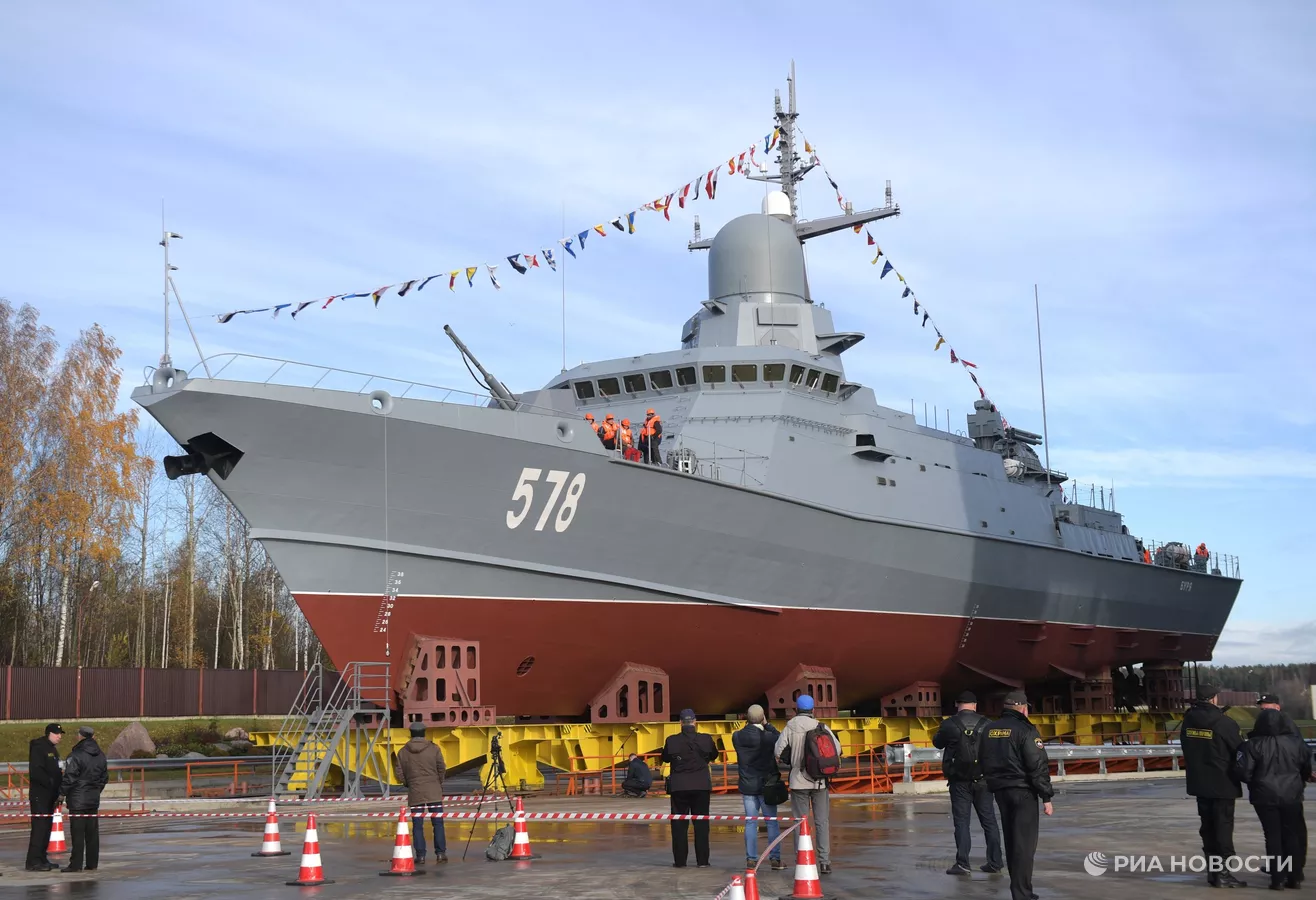
It goes without saying, that the nation which can, for the price of a SINGLE US strategic missile submarine, which doesn't even exist yet, procure eight state-of-the-art boomers, will have little problem prosecuting the large scale combined arms operation such as SMO without disrupting economic activity at home. But they don't teach those things in American universities where Kissinger is listed as "honorable" member. And so it goes--PR maneuvers to cover up the real story. Meanwhile, Russia, who, as we all know, ran out of missiles yet again, yesterday turned off the lights in 404 and continued to churn out those nasty little Karakurts capable of carrying all those missiles, of which Russia, evidently, runs out constantly. One of them, "Burya" (Tempest) has left for State Trials to be transferred to the Navy soon. 

I wonder why Russia ordered the additional batch of 3M22 Zircons a few weeks ago (in Russian), wink, wink. This is your Saturday primer. 

Friday, November 20, 2020

It Really Becomes Annoying As Hell.

I will not stop repeating it until I am dead--Russia owes nothing to anyone, period. Want something from Russia? Take a number and be nice at the window once your number is called. I also will repeat it ad nauseam--constant attempts to "analyze" anything in contemporary international relations from the position of some diplomatic chimeras of the days past should stop and as Doctor Lecter used to say Quid Pro Quo, Clarice. Or, rather, Emmanuel. This, plus overwhelming cutting edge military power--these are the only two things which matter today. No good will, no emotions, just Quid Pro Quo and recognition that behind this offer is a deadly big stick capable to ensure that if this Quo is not good enough negotiations are over and no new Quid is coming. Out of the cellar of geopolitical well-wishing come Macron's new ideas:

Russia and France have different objectives, yet both recognize the need to push back against Turkey’s expansionism, the intrusive influence of the US, and the zero-sum security architecture in Europe, which threatens stability. Emmanuel Macron has called on the European Union to reconsider policies towards Russia and improve relations. The French President's move deserves a favourable response as rapprochement is sadly now a politically bold move in the Euro-Atlantic community.France has also requested a role in establishing lasting peace in Nagorno-Karabakh. Paris approved of Turkey’s collaboration with radical militant groups in Syria, although now objects as Ankara exports the same fighters to Libya and the South Caucasus. Paris has traditionally depicted all anti-Russian Chechens as freedom fighters, albeit it now calls for greater anti-terrorism cooperation with Moscow.
The immediate question, granted there is some sort of Turkey's expansionism, is--and how does France see herself "pushing back" against everything bad for everything good in this geopolitical "combination"? Russia, as was pointed out not for once, is not going to "repatriate" those "anti-Russian Chechens", they are France's responsibility and let France deal with them. Moreover, what is France's real value in "pushing against intrusive influence of the US and zero-sum security architecture in Europe"? Can you make bees hate honey? No, really? The next stratagem, the "vision" is down right hilarious:
Macron seeks French leadership in a sovereign and strengthened EU, which does not entail including Russia in a shared European security architecture. Meanwhile, Russia has also abandoned former illusions about a Greater Europe and is now pursuing a strategic partnership with China to develop a Greater Eurasia. Keeping in mind these realities, a Russian-French partnership would be limited to mitigating and managing the dividing lines in Europe.    
No, really, ha-ha, Macron doesn't seek "leadership", what he seeks is an age old arrangement in case Germans really get all pissed off with continuous national suicide and France, as usual, will be in the way, this is when Russia comes in. Nope, this ship sailed. In fact, neither Germany nor, especially, modern France are the players of a scale which can REALLY interest Moscow in anything but markets and, in case of France, some sort of support in UNSC. "Sovereign EU" sounds like a meme, especially when having a leader such as Macron--this is down right hilarious. The next para is more than just hilarious, it is clinical, as in a psychiatric case clinical that is.
Macron is deeply critical of Russia, yet he cautioned that “pushing Russia away from Europe is a deep strategic error because we are pushing Russia either to isolation which increases the tensions, or to ally with other great powers like China”. Macron seemingly attempts to play the role of a new Kissinger that reaches out to Moscow to prevent Russia from cosying up to China.
Russians have a meme, it is really not in any way deliberately offensive, it is just a meme, about Estonians, like in being slow in recognizing a reality. Well, on the Estonian scale of being slow Macron and France, obviously, are off it and are finally discovering that not only Russia has been "pushed away" long time ago, but what is most remarkable--overwhelming majority of Russians view Europe as a hostile and creepy place and do not want to have anything in common with it. They are pretty happy with being "pushed away". I am not even talking about this BS comparison with Kissinger who not only was "sold" to the world by propaganda as a shrewd diplomat but in reality being, as is a tradition in US political life, nothing more than a second-rate thinker who was mostly in self-promotion and constructing of own myth. He was a first-rate media figure and a second-rate diplomat who is now observing some juicy fruits of American school of "diplomacy" biting whole US establishments in the ass. Basically, Kissinger is to diplomacy, what Patton is to armored warfare. If Macron sees himself as Kissinger, good luck, but geostrategic reality is such that France is not a subject in the process of shaping the global power balance. 
 
Both Paris and Berlin have been "politely" told by Moscow to go fuck themselves in regards to Nagorny Karabakh and this is the only way it is, and should be, from now on. You have power and you have goods? Make an offer, otherwise--bug off. And even in Russian-Chinese relations, as I am writing non-stop, not everything as it seems in the West. But I will touch upon it later. But there is  a reason Russia supports European conservative movements because Macron's Europe is doomed. The scale of West-Russia split is evidently still not grasped by very many in the West. They still think that it is all fun and games. It is not, and Russia's Asian vector is just the part of the puzzle--I am constantly on record: don't overestimate the role of China in Russia's geopolitical realignment. China is extremely important but she is not the only factor in Russia's geopolitical considerations. I usually agree with Patrick Armstrong on many of his conclusions but not with this one:
So is Moscow about to say it’s had enough? If so, it has somewhat of a problem. At the moment and for the foreseeable future, depending on how serious the civil disorder is after its election, the United States is the principal power in the world if for no other reason that it has far more destructive power than anyone else. Moscow must tread carefully here; cutting relations with Washington would cost more than it’s worth. London is probably lost to Moscow but Berlin, Paris and Rome are not necessarily lost. And, as they go, many other Europeans will follow. Therefore Moscow can hope that, in the reasonable near term, more normal relations with some of the principal European powers may be possible. Thus it would be a bad move to cut relations with them. 

For starters, Moscow is not impressed with American, grossly exaggerated to start with, destructive power, which is not that destructive in a conventional peer-to-peer conflict. Secondly, as I say above in this post, Russia is open for a decent offer. But, if Europe has anything to offer--let it take a number and wait for the number to be called. As for Russian-American relations, Vladimir Putin was explicit today when stating (in Russian) that: it is impossible to spoil Russian-American relations, because they are already spoiled. Can not get any clearer than that, I see no problem with "cutting relations" with Washington once one considers this simple fact that there is NOBODY to talk to at the highest political level in the United States. US is a dysfunctional state which is utterly non-agreement capable, plus, come on, let's face it--Russians know damn well both economic situation in the United States, Europe and China. Russia, of course, will maintain diplomatic and trade relations with Europeans on bilateral basis, but, honestly--the cultural shift of unprecedented historic scale in Russia have occurred. Opinions of some Moscow pseudo-intellectuals and doctrine-mongers trying to imitate intellectual activity in foreign policy field are mostly worthless, it is better to listen and watch what Putin, Lavrov, Mishustin, Belousov and Shoigu say and do in the last couple of months. 

H.G. Wells, in his book Russia in the Shadows, after visiting Russia and interviewing Lenin, described Lenin in 1920 as a "Dreamer in the Kremlin". In 1920 Russia was utterly destroyed by WW I and Civil War. By 1939 historic Russia was a premier industrial power in Europe. In 1945 Red Army hoisted the Red Banner over Reichstag. In 1957 USSR launched Sputnik, in 1961 Yuri Gagarin became the first man in space and the Soviet Union became the most educated nation in the world, especially after the devastation of WW II. For all his faults, Lenin turned out to be not just a dreamer. Macron is not in the same league, not even close, albeit I propose to apply to him the term Elysee Palace Dreamer as a term describing a person who is absolutely out of his depth and has no grasp of the reality. Memorize: Quid Pro Quo and hypersonic weapons, Quid Pro Quo and hypersonic weapons, Quid Pro Quo... 

Tuesday, May 12, 2020

Who Said So To Start With?

Daniel Larison asks a question, a good one: about Kissinger's mythology. He asks the question based on Thomas Meany's (oh, he is so meany to good ol' Henry, couldn't contain myself;)) piece in New Yorker titled The Myth Of Henry Kissinger. Larison posits: 
My main point is this: hey, guys, aren't you a bit too late to the party? I, personally, heard enough about Washington consensus, but apart from praises heaped on Kissinger by Washington and some in squarely pro-American camp elsewhere, I, as an example, since childhood, which fell on Vietnam War, heard nothing positive about the guy, which could have been explained by USSR support for Vietnam. Later, however, I came to appreciate all hollowness of his reputation as a "geopolitical thinker" or "maitre of global diplomacy" when started delving a bit deeper into the history of the American geopolitical mindset--there was nothing to admire not just on humanitarian grounds, but on academic ones too, about Kissinger. In fact, bar some things which qualify as war crimes, Kissinger's views are down right numbingly boring in their mediocrity and predictability. The history of the US "diplomacy" and geopolitical thinking in the last  30 years is one of a shoddy scholarship, perpetual delusion and demagoguery rooted deeply in the platitudes and cliches which by now became memes and a butt of jokes around the globe. Kissinger was the one who helped to forge this pitiful state of the US "foreign (lack of) policy" and present, with the assistance of many willing helpers, self-evident truths as insights worthy of a true statesmen. Insights they were not and America's obvious decline and geopolitical retreat, denied by some against the body of overwhelming empirical evidence, was in many ways predetermined by Kissinger's views of the world, which were and are, politely speaking, are those of a slick top government bureaucrat, pretending to be a scholar and a real statesman, while not being genuine article at all. We all know what this "scholarship" is. Enough to recall Kissinger's recent meandering pathos-ridden pseudo-historical piece in the Wall Street Journal where he waxes "geopolitical" and confirms the lack of proper intellectual rigor in modern US political class, obvious to everybody but the US political class itself.  

Larison, however, while counter positioning (to Kissinger) praising George F. Kennan for his views regarding War in Vietnam, forgets that, be as it might, thinkers and scholars are not always defined by their careers. After all, Kissinger had a brilliant career when defined within the beltway framework where competence, principles and integrity play second, if not the third, fiddle to self-promotion and exposure in the media. Especially so in the modern US where self-aggrandizing is a pastime on the same level as baseball. Kennan might have been right on Vietnam, and later he lamented his famous Long Telegram but still, in his wonderful memoirs offered some prescriptions for the world which he would have never offered should he be alive today. For starters, Kennan, being a diplomat and, surprise-surprise, Russian speaker failed to grasp (later, in 1980s he will fail it again) the impact warfare had and continues to have on Russia. 
At bottom of Kremlin's neurotic view of world affairs is traditional and instinctive Russian sense of insecurity. Originally, this was insecurity of a peaceful agricultural people trying to live on vast exposed plain in neighborhood of fierce nomadic peoples. To this was added, as Russia came into contact with economically advanced West, fear of more competent, more powerful, more highly organized societies in that area. But this latter type of insecurity was one which afflicted rather Russian rulers than Russian people; for Russian rulers have invariably sensed that their rule was relatively archaic in form fragile and artificial in its psychological foundation, unable to stand comparison or contact with political systems of Western countries. For this reason they have always feared foreign penetration, feared direct contact between Western world and their own, feared what would happen if Russians learned truth about world without or if foreigners learned truth about world within. And they have learned to seek security only in patient but deadly struggle for total destruction of rival power, never in compacts and compromises with it.   
Mind you, this was written in February 1946, 9 months after the end of war in Europe and 5 months after the end of WW II as a whole. The phrase about "learning the truth" reads especially comical today when Russia is on order of magnitude freer country than any one in Europe and we live with the consequences of a destruction of American political institutions which used to be commonly known as democracy, not to mention chaos, destruction and murder unleashed by NATO and its main sponsor, USA, on the world. This was written after yet another historic Russia's "direct contact" with the West, which, as was the case with yet another "contact" in 1854-56,  1812, and before that in 1618, and prior to this in 1242, among many others, resulted not only with the West "contacting" Russia, for some reason, again, on her territory, but in a genocide of Slavic and other people of Russia on a historic scale, resulting in 27 million people killed and most of the historic Russia literally wiped off the face of the earth. By any metric being a bit "neurotic" not only in Kremlin but on the level of the whole population of the historic Russia was more than reasonable. As history demonstrated so vividly up to this present moment--Russia's "sense of insecurity" was and is not only inevitable but highly warranted. Sadly, Kennan, being a man of, primarily, letters and law and having a rather idealistic, and in many respects "aristocratic", that is highly misguided, view of primarily pre-revolutionary Russia, couldn't grasp then the true scale of the events of the WWII and how it related not only to Russia, but to the Western world in general, and the US in particular. 

Later, in his memoirs, while giving a recognition to the WW II, he would still stick to the narrative of a grotesqueness of a Stalin's "regime" and some alleged impact it had on Russians (that is why he is voted the most important Russia's statesman, I guess), implying, indeed, grotesque, Solzhenitsified figures of political repressions, debunked today by competent and honest historians both in Russia and in the West, not to mention by opening of the archives and by Russian people themselves. Yet, as idealistic and in many respects a well-wishing (prekrasnodushnyi) man Kennan was, he left one important realist legacy, which despite his role, even if unwitting, in unleashing a Cold War on false premises, he stated this, and that was a statement by a man of principles:
Little did Kennan know, that from the vantage point of 2020, his views of Russia and Russians, free to "directly contact" the West any time they want, could be a subject of scorn by overwhelming majority of these very same Russians who, justifiably, view the United States as a military aggressor doing over and over again what Kennan stood against in 1960s--the war. Thus, any references today to Western "democracies", while setting Kennan as a person on a much higher level than Kissinger, hardly make a better case for him being properly qualified to pass a judgement. In the end, as I repeat like a parrot--the problem is systemic and endemic in the American post-WW II exceptionalism exercised even by those who refer to themselves as realists (however meaningless this term is) and who still are trying to find a political and moral rationale where there never was any but greed, lust for power and gross overestimation of own power and significance. American modern elites are simply not good, no matter which opposites they praise in their pursuit of a chimera.

Saturday, April 18, 2020

Another One .

You know that I am on record, in fact I am explicitly on record, forcefully and with emphasis, that  US "Russia Study" field from the very political top, up to a level of POTUS, to the very bottom of a food chain populated with graduates of all kinds of useless programs and pseudo-sciences who do "research" on Russia by communicating with Russia's cultural, political and ideological rabidly pro-Western fringes because it is the only environment where these pseudo-scholars and allegedly "intelligence" people can get what they WANT to hear, not what is needed to be heard, is a wasteland. In general, American field on Russia is populated with people who literally have no clue. Such as Thomas Graham from Yale and from good ol' Henry Kissinger snake oil org dealing in BS in allegedly "geopolitics", business and other useless consulting. 

I never hid the fact that US skills in foreign policy in general, and towards Russia in particular, are those of the third world nation and I know many third world nations whose diplomatic and analytical skills are still better. I pointed out not for once, and I am writing the third book on this issue, that US problem, far from being ignorant of the outside world, is, in fact rooted in a complete lack of self-awareness by US political class which exists primarily in an echo-chamber of shoddy "scholarship", mediocre thinkers, if that, and in an absence of a reliable understanding of real power. They simply have no method, period. The reason they don't have this method is because they place money at the center of any "analysis" without understanding of how real economies work and because of a rather weak grasp of the actual history. In general, as I stated not for once, it is next to impossible to explain humanities-"educated" (Graham has BA in "Russian Studies" and Ph.D in Political "Science", which means he wasted years studying BS) product of US Ivy League humanities madras how Russia really works, starting from economy to military, to political culture. Being a product of US "political culture", that is to say show-business, Graham wrote a piece two day ago which is very US political class, obsessed only with own appearances, symptomatic.  
                           Oil Crisis Tests Putin’s Skill to Project Strength
Projection of whatever sells as an illusion of competence, power and electability is, actually, a very American thing. In fact, it is the foundation of the election theater known as American "democracy". This is not to say that Putin doesn't "project", he surely does, but this projection is nowhere near in its falsity, superficiality and staging than it is the case with now running non-stop US election-campaigns. In this case Graham exhibits a very American political idiosyncrasy which puts forward appearances not the content. He surely confirms this immediately:
NEW YORK: Russian President Vladimir Putin refuses to yield under pressure. That is a matter of pride for Putin himself and a key aspect of his appeal to Russian elites and the public alike. The trick is preserving that reputation in the real world, where leaders routinely miscalculate and pivot while remaining loathe to admitting mistakes. The plunge in oil prices because of the COVID-19 pandemic and the collapse of the OPEC+ agreement on production cuts provide the most recent test.
Graham is butt-hurting and it shines through his traditional for US policy-making craft, and resorting to a traditional making shit up, which one would expect from a middle-level former bureaucrat in W. Administration well-known for fvcking it up majorly both for the world and the US. Graham lies, of course, because increase (and, most importantly, dynamics) of Russia's gold and currency reserves clearly indicated in Bank of Russia statistics, that Russia was in reserves' mobilization mode well before any actions at Vienna's OPEC meeting in March this year. 
One can easily go to the site of Bank of Russia and apply filter say from April 2015 through April 2020 to see a dramatic growth of reserves, such as three fold growth of gold reserves alone. For Graham, obviously, it is not of any value since he doesn't understand the state of mind of majority of Russians who DO understand that they are in the existential struggle with the combined West led by the United States and the only thing Putin MUST project is a commitment to finish this fight. Russia was mobilizing for this fight since Munich Speech in 2007. Well, Graham, being a manager of Kissinger's org, should read his own boss' admission in 2015 where good ol' Henry stated (or accidentally dropped) the truth which majority of Russians (no, not the Russians Graham knows) are keenly aware of:
"Kissinger: If we treat Russia seriously as a great power, we need at an early stage to determine whether their concerns can be reconciled with our necessities. We should explore the possibilities of a status of nonmilitary grouping on the territory between Russia and the existing frontiers of NATO. The West hesitates to take on the economic recovery of Greece; it’s surely not going to take on Ukraine as a unilateral project. So one should at least examine the possibility of some cooperation between the West and Russia in a militarily nonaligned Ukraine. The Ukraine crisis is turning into a tragedy because it is confusing the long-range interests of global order with the immediate need of restoring Ukrainian identity. I favor an independent Ukraine in its existing borders. I have advocated it from the start of the post-Soviet period. When you read now that Muslim units are fighting on behalf of Ukraine, then the sense of proportion has been lost.
I will omit here Kissinger's complete lack of any foresight in regards to "integration", but Graham surely knows that there are no any altruistic intentions of the West towards Russia. Russians, being people well-conditioned by real wars, of which Graham has no real knowledge, exist in a different political and cultural reality to which US "methodology", fraudulent as it is, does not apply in principle. It is a complete different cultural and geopolitical thinking reality. The only people who do have at least some connection to this Russian reality are those from actual military and intelligence community who have to deal with tangibles, which, as it turned out, US political class ignores due to inability to understand them.  As a result Graham arrives to this:
But Moscow did not anticipate the Saudi reaction to its refusal to agree to further cuts. The Saudis’ threat to open the spigot and offer steep discounts on their oil exports pushed oil prices down to lows not seen in decades. The price war had begun, even if only the Saudis were prosecuting it robustly: The Saudis had the capacity to add 2.5 million barrels a day, the Russians, 300,000. True to form, Moscow was defiant. Despite Russia’s dependence on oil for two-thirds of its export earnings and 40 percent of its budget revenue, the Ministry of Finance announced that Russia could withstand prices as low as $25 a barrel for up to ten years. It would draw on its $150 billion National Wealth Fund to cover gaps in the budget, currently based on an oil price of $42 a barrel. That was certainly an exaggeration, and the Russian oil industry itself would suffer significant damage in the short term if wells had to be capped. Still, the ministry sent the unequivocal message that Moscow would not back down.
Ah, no. It was anticipated, because unlike W. Administration of which Graham was a part of, such as "planning" some shit, I guess how to lose the war and bankrupt the United States in the process, Russia (Putin) operates on a completely different plane of a strategic planning and as the track record of the US and Russia in the last 10 years are compared, well let's speak in broadsides here, US "record" is that of a dysfunctional country incapable to even govern itself, let alone achieve any tangible political objectives abroad. Simple as that. What Russia may not have anticipated (and even that is a question) was an unfolding of Covid-19, but that is the whole other story altogether. Moreover, as latest data from bank of Russia shows in terms of drawing on Russia's gold-currency reserves, Russia, indeed, can sustain this oil war for many years. So, why Graham arrives to the conclusion that it is an "exaggeration" remains  mystery known only to "analysts" such as him and, as I already stated above, their abilities are centered mostly around handling appearances, aka PR, and not operating with actual data and facts on the ground. If that would have been otherwise we would have had by now a stream of the American first-rate geopolitical and strategic thought. Instead what we have is a feeble exercise in chimeras, simulacra and demagoguery ranging from Fukuyama and Brzezinski to even late Huntington's attempts to make sense of the unfolding world which American self-proclaimed "intellectual" class largely is utterly unprepared. Graham is not an exception. 

Here is a fact which Graham cannot face, that is why he continues to make shit up, when writing about oil wars:
US President Donald. Trump gave Putin the opening he sought. Trump initially greeted the price collapse as a “big tax cut,” but by the end of March, he changed his tune under pressure from the domestic oil sector. He set about trying to persuade the two strongmen he had cultivated since assuming office, Saudi Crown Prince Mohammed bin Salman and Putin, to agree to major production cuts.On March 31, Trump called Putin to discuss the novel coronavirus crisis and oil markets. Kremlin statements routinely note who initiates the call when Putin talks to foreign leaders, and the Kremlin readout makes it clear that Trump made the call – the inference was that Trump, not Putin, urgently needed relief from the price war and the pandemic.
This is a loaded (with utter butt-hurt) statement which reads like lament. For starters most countries, to the best of my knowledge, disclose on whose initiative phone calls are made between the heads of state. And, actually, if Mr. Graham would have followed events of the last couple of weeks he would have understood that it was and still is Trump who desperately needs anything, something which would save now wrecked US shale oil. There are NO inferences, there are only facts on the ground: Russia can ride this crisis out, the United States cannot and Texas Railroad Commission will meet on April 21 to discuss desperate cuts. Hey, don't look at me, just read the titles:
This was Russia's position from the get go and it was explicitly articulated by Putin on a number of occasions: Russia was ready to cut ONLY if the United States takes part in those cuts.  
This was repeated so many times, on so many occasions, that I don't know how Graham has missed that. Moreover, Russia's main long term objective is to attach the United States to a newly emerging Cartel and to restrain US attempts to pull blanket on itself. Moreover, this whole event shows Russia's even bigger goal for setting up what was already dubbed as Yalta 2.0 where new world order would be formalized.  Today, against the background of mounting empirical evidence of the American collapse and departure as self-proclaimed hegemon, new arrangements between superpowers are an utter necessity. United States may continue with its incessant propaganda and pretense that it is what it thinks it is, but the era of the American "dominance" across the board is over, it was over for some time now. United States still remains a superpower, but it is a superpower among few others and the better this fact is internalized and more humble attitudes are developed before getting to the negotiating table, the better it will be for all parties involved, including the United States herself which is in dire need of putting its own house in order for a long time. But don't expect "expertise" from such people as Graham to be of any use for that, not only spinning, a euphemism for lying, is the only skill they have but the fact of being sore losers only compounds their inability to face reality. 
Thursday, August 2, 2018

Getting Situationally Aware.


Remember this? 
And this:

However debatable such an approach may be, there is no denial that this proverbial G(t), that is geopolitical potential is quantifiable and here is an interesting piece of analysis by former Indian diplomat M. K. Bhadrakumar, who in his piece US-Russia-China triangle in flux, again comes to some interesting conclusions and provides some valuable insights. He starts with giving a trivial and unimaginative Kissinger "triangulation" of 1970s some treatment, not forgetting to mention earlier Eisenhower's triangulation of 1950s: 


Kissinger argued that the United States, which sought to profit from the enmity between Moscow and Beijing in the Cold War era, would therefore need “to play this balance-of-power game totally unemotionally. Right now, we need the Chinese to correct the Russians and to discipline the Russians.” But in the future, it would be the other way around….Now, this recapitulation is useful today, because Trump’s moves so far are indicative of an agenda to revert to the Eisenhower era – containment of China by forging an alliance with Russia.


As I stated not for once, American geopolitical "theory" is highly unimaginative and rigid. Its main fallacy is an assumption that the US is eternal and ever omnipotent—both being very false notions. It was inevitable in the scholarship represented by such "academe" as Brzezinski or Fukuyama, in general, and a collection of raging Russophobes in relation to Russia in particular. Kissinger may think that US can continue to play this geopolitical triangle or that this triangulation is useful today—an idea Kissinger exercises now—but the reality is much more complex and it is not anymore about this proverbial, and largely obsolete, US-Russia-China triangle. The reasons (some of them) it is obsolete is because: 


1. NO meaningful "alliance" (or whatever other tired term could be used here) between Russia and US is possible today in principle. It is partially due to Russia's increasing G(t) and S(t) with the same diminishing for the US. And, because Russia knows the score in this dyadic relations. US simply cannot afford to "buy" Russia. It could in 1990s, it failed due to hubris and delusion. The question today is if the US will be able to pull itself by the shoelaces from the swamp she is in. 


2. Both Russia and China are the key parts of Eurasia and it is not about just Russian-Chinese relations—it is about new Eurasian economic and security configuration in which the US is viewed as merely another power which needs to be prevented from interfering into the Eurasian affairs. Indeed, India is in play, so is Iran and so is…drum roll—Europe. But there is some worry on China's part and it is understandable:

The government-owned China Daily carried an editorial – Has the meeting in Helsinki reset US-Russia relations? – where it estimates that at best, “Helsinki summit represents a good beginning for better relations between the US and Russia.” Notably, however, the editorial is pessimistic about any real US-Russia breakthrough, including on Syria, the topic that Putin singled out as a test case of the efficacy of Russian-American cooperation.

This unease can be explained in the next passage:

On the other hand, the Chinese Communist Party tabloid Global Times featured an editorial giving a stunning analysis of what has prompted Trump to pay such attention (“respect”) to Russia — China can learn from Trump’s respect for Russia. It concludes that the only conceivable reason could be that although Russia is not an economic power, it has retained influence on the global stage due to military power:

  • Trump has repeatedly stressed that Russia and the US are the two biggest nuclear powers in the world, with their combined nuclear arsenal accounting for 90 percent of world’s total, and thus the US must live in peace with Russia. On US-Russia relations, Trump is clearheaded.

On the contrary, if the US is piling pressure on China today, it is because China, although an economic giant, is still a weak military power.

And here is the issue for China and people who formulate strategies there—using mere the size of GDP or the size of nuclear arsenal is not sufficient enough to become really strong military power, that is to gain this main component which plays the most important role in this G(t)--XM. Here I may go on a tangent and recall a very interesting example from the world so completely removed from military that is may seem almost irrelevant—yet, it is very germane to such a discussion. 


About 10-11 years ago two of the greatest jazz and fusion guitar players of generation, Alan Holdsworth and John McLaughlin, had a friendly discussion on the pages of one of the guitar magazines in which they concluded, rightly so, that no matter how good one is in using sustain on their electric guitar, together with other possibilities sound processing affords an electric guitar player, it only matters if you can play acoustic, completely unplugged—that is the real measure of one's ability. Absolutely the same applies to military power—one is either a great conventional military power or, once a serious look is taken both at the nature of a military conflict and evolution of military technology, is a mere static observer of a great global power game in which conventional capability becomes a decisive factor. In this, Mr. Bhadrakumar's final conclusion is wrong:

Indeed, if the crunch time comes, China will be on its own within the Kissingerian triangle. And China needs to prepare for such an eventuality. On the other hand, China’s surge to create a vast nuclear arsenal could make a mockery of the grand notions in Moscow and Washington that they are the only adults in the room in keeping the global strategic balance.

China is (relatively) weak militarily NOT because she doesn't have enough nuclear weapons—this could relatively fast, with Chinese financial wherewithal, be addressed. Chinese relative military weakness comes from a huge technological, cultural and organizational issues of her conventional capability, which, despite its polished outward appearance, is nowhere near with that of the United States or Russia. It is technology—always was, always will be. It is also an operational experience and the way conventional forces are deployed, which matters great deal—China has no real operational experience here. There are reasons to believe that some technological gaps will never be closed—China continues to struggle mightily in aviation, submarine, space technology and other key technological and operational concepts. Moreover, one has to answer the questions of why China needs to prepare for any "Kissingerian" eventuality and what is this "grand notion" in Moscow? All signs from Moscow are unequivocal in their confirmation of Moscow' commitment to Eurasian economic integration and maintaining the peace—this is impossible without China. 


But, paradoxically, the main answer lies within new Russian geopolitical posture, which in today's parlance could be characterized as a pragmatic egoism and in this new Russia's vision of herself China is by far more important, both as an energy and military technology market, than the United States will ever be. Russians finally learned a very healthy cynicism when it comes to Russian interests and in relation with China will continue to observe the dynamics of mutual trade—unlike the US, China does have means to "buy" Russia geopolitically, granted, of course, on Russia's conditions and Russia doesn't mind having China's strategic back. China knows it. This immortal principle "you scratch my back—I scratch yours" applies to Russian-Chinese relations completely, while it doesn't work and will not work in US-Russian relations, thus killing any vain discussion on some "triangle". Indeed, why break a good thing with mutual scratching? Especially when at stake is a new brave world where at least some semblance of balance and real order will be restored. As I stated not for once, the times of an alcoholic low life and cabal of thieves in Kremlin are over—good that at least this idea started to dawn on someone in Washington. Maybe someone is getting, finally, situationally aware there. As they say—better late than never.