Showing posts with label PD-35. Show all posts

Thursday, May 8, 2025

Chinese Are Practical People.

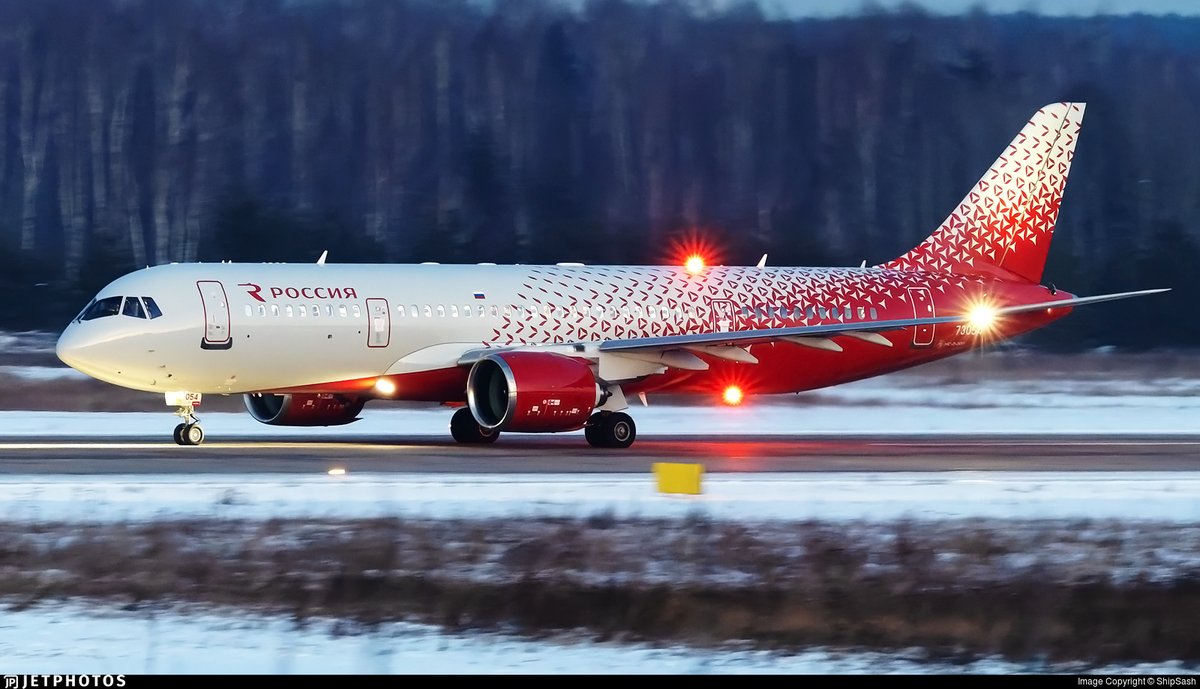
And when they see this flying yesterday from Irkutsk to Moscow non-stop for final certs:


Or this, also flying beautifully (ahem...):

Both being fully Russian aircraft which are powered by state-of-the-art PD-8, PD-14 and use Russian avionics, composites et al, Chinese know that PD-35 is coming and is not far away. You all remember how joint Russian-Chinese wide body aircraft CR-929 became C-929, because Russians didn't like how Chinese side viewed profits share. Now Chinese know that Russia fully recovered her commercial aircraft mojo and can do it all completely on her own. And suddenly, Russians are also practical and very delicate people who know that after all, it is Russia which is not only second (after the US) nation in the world capable totally out of own resources build state-of-the-art aircraft, but also the nation which tied all West's resources which otherwise would have been thrown against China. Comrade Xi is very sincere when stating today: 

ПЕКИН, 9 мая – РИА Новости. Россия и Китай должны быть настоящими друзьями, закаленными, как сталь, заявил председатель КНР Си Цзиньпин. "Необходимо поддерживать дружбу из поколения в поколение и быть настоящими друзьями, закаленными, как сталь", - приводит МИД КНР слова китайского лидера, сказанные во время встречи с журналистами после переговоров с президентом России Владимиром Путиным.
Translation: BEIJING, May 9 – RIA Novosti. Russia and China must be true friends, tempered like steel, said Chinese President Xi Jinping. "We must maintain friendship from generation to generation and be true friends, tempered like steel," the Chinese Foreign Ministry quotes the Chinese leader as saying during a meeting with journalists after talks with Russian President Vladimir Putin.

And lo and behold:

Москва. 8 мая. ИНТЕРФАКС - Россия и Китай намерены продолжить сотрудничество по созданию дальнемагистрального широкофюзеляжного самолета, оно не прекращалось, заявил "Интерфаксу" первый вице-премьер РФ Денис Мантуров. Отвечая на вопрос о том, может ли РФ вернуться к кооперации с КНР по созданию широкофюзеляжного самолета, он сказал: "Может, мы его (сотрудничество - ИФ) и не прекращали".  ... В августе 2022 года руководство ОАК сообщило, что работа над CR929 продолжается, но с учетом последствий пандемии и введения против РФ санкций из-за конфликта на Украине формат участия в проекте придется "актуализировать". Мантуров тогда уточнял, что РФ будет участвовать в статусе поставщика агрегатов и компонентов для самолета, в мае прошлого года он подтверждал готовность России участвовать в проекте "на основе договора исполнителей". Вместе с тем, в феврале этого года совместное предприятие ООО "Инженерный центр программы СиАр929", учрежденное CRAIC в 2019 году под проект разработки дальнемагистрального пассажирского самолета CR929, подало заявление о ликвидации юрлица. Сейчас компания проходит соответствующие процедуры.

Translation: Moscow. May 8. INTERFAX - Russia and China intend to continue cooperation on the creation of a long-range wide-body aircraft; it has not stopped, Russian First Deputy Prime Minister Denis Manturov told Interfax. Answering a question about whether Russia could return to cooperation with China on the creation of a wide-body aircraft, he said: "Maybe we have not stopped it (cooperation - IF)." ... In August 2022, the UAC management reported that work on the CR929 was continuing, but given the consequences of the pandemic and the introduction of sanctions against Russia due to the conflict in Ukraine, the format of participation in the project would have to be "updated." Manturov then clarified that Russia would participate as a supplier of units and components for the aircraft; in May last year, he confirmed Russia's readiness to participate in the project "based on a contractor agreement." At the same time, in February of this year, the joint venture Engineering Center for the CR929 Program LLC, established by CRAIC in 2019 for the project to develop the CR929 long-range passenger aircraft, filed an application for liquidation of the legal entity. The company is currently undergoing the relevant procedures.

Go figure, right? Well, there is nothing to figure here, actually. China knows that sanctions are coming and no amount of maneuvering can save both Comac-919 powered by US-French LEAP engines and, let alone, perspective "Chinese" C-929 which was planned as the aircraft (after letter "R" disappeared) which could be remotorized on the variety of the American and Rolls-Royce engines. And no, world-class competitive high bypass ratio Chinese engines are not coming any time soon. And here is this trick--any commercial aircraft Russia produces can be exported anywhere, because they are all Russian-manufactured. The only thing the US can do is to try blackmail potential buyers, but that's for other time to discuss--Boeing and Airbus have all reasons to sweat about MC-21. China, however, is pinned down now to its, however large, internal market and IS under the Sword of Damocles of not quite adequate POTUS who may, in the last ditch attempts to stop Chinese economic juggernaut, simply sanction jet engines and that will be it for Chinese attempt not only at competition abroad, but even domestically. So, enter PD-14 and PD-35 and Russian made subsystems from avionics to APU, to composites. Make your own conclusions. As I stated--Russians are very delicate people, apart from being very practical, like Chinese.

Tuesday, March 28, 2023

About Composites.

Ah, look at that. Funny, I spoke about it in my yesterday's video:

МОСКВА, 28 марта. /ТАСС/. "Аэрокомпозит" изготовил и поставил на испытания в ЦАГИ прототип крыла российско-китайского широкофюзеляжного дальнемагистрального самолета CR929. Об этом в ходе форума "Композиты без границ" заявил гендиректор "Аэрокомпозита", первый замгендиректора корпорации "Иркут" Анатолий Гайданский. "Мы в этом году закончили и сейчас поставили на испытание в ЦАГИ прототип крыла композитного для самолета CR-929. Это вы знаете наш совместный с нашими китайскими партнерами проект, который мы сейчас готовим к испытаниям и до середины наверное этого года проведем испытания", - сказал он. Как уточнили в пресс-службе корпорации "Иркут", куда входит АО "Аэрокомпозит", крыло перспективного широкофюзеляжного дальнемагистрального самолета будет представлено на авиасалоне МАКС-2023. Самолет несколько лет разрабатывался ОАК совместно с китайской CRAIC. Планировалось, что российская сторона возьмет на себя инженерные работы, а в Китае будет налажена окончательная сборка воздушных судов. Самолет планировалось вывести на рынок в 2025-2027 годах. Он должен был быть представлен в трех версиях. В базовой комплектации авиалайнер должен был перевозить 280 пассажиров.

Translation: MOSCOW, March 28. /TASS/. "Aerocomposite" has manufactured and tested at TsAGI a prototype wing of the Russian-Chinese wide-body long-haul aircraft CR929. Anatoly Gaidansky, General Director of Aerocomposite, First Deputy General Director of the Irkut Corporation, stated this during the Composites Without Borders forum. "We have finished this year and have now put a prototype of a composite wing for the CR-929 aircraft for testing at TsAGI. You know this is our joint project with our Chinese partners, which we are now preparing for testing and will probably be tested by the middle of this year," he said. According to the press service of the Irkut Corporation, which includes JSC Aerocomposite, the wing of a promising wide-body long-range aircraft will be presented at the MAKS-2023 air show. The aircraft was developed for several years by the UAC together with the Chinese CRAIC. It was planned that the Russian side would take over the engineering work, and the final assembly of aircraft would be arranged in China. The aircraft was supposed to be put on the market in 2025-2027. It was to be presented in three versions. In the basic configuration, the airliner was supposed to carry 280 passengers.

I will repeat it again: Russia does not need China for CR 929 because Russia has the state-of-the-art IL-96 400, PD-35 in development and all composite industry she needs. Flying from Kaliningrad to Petropavlovsk-Kamchatsky could be done in one stop by TU-214 or MC-21 somewhere in Novosibirsk or Krasnoyarsk, or, eventually, with MC-21 Extended Range non-stop. 

Yes, they are flying the thing in experimental mode now. 

Per situation with children and their psycho-bitch murderer. I can not easily take this, but I 100% agree with Larry:

I am on record--most of the US media and "intellectual" class are war criminals and criminals against humanity. There are no normal people working for the US MSM--none.

Tuesday, July 5, 2022

A-ha! Interesting News.

As someone on our discussion boards noticed, beautifully: Russia and China do not stand shoulder to shoulder, but back to back. Very succinct. That is why I am always standoffish in regards to Russian-Chinese cooperation in some (by far not all) spheres. While China and Russia are de facto military allies, economically--they are competitors. And here is what Yuri Borisov confirmed a week ago:

АЛЕКСИН /Тульская область/, 29 июня. /ТАСС/. Россия сокращает свое участие в проекте создания совместного с Китаем дальнемагистрального широкофюзеляжного самолета CR929, сообщил вице-премьер Юрий Борисов в рамках пленарной сессии форума "Инженеры будущего". "У нас идет с Китаем этот проект, идет в принципе не в том русле, которое нас устраивает. Китай по мере превращения в индустриального гиганта все меньше и меньше заинтересован в наших услугах, у нас работает наше КБ, мы имеем громадный опыт в ЦАГИ (Центральный аэрогидродинамический институт - прим. ТАСС). <...> Но у китайцев больше потребностей, чем у нас на сегодняшний день. Наше участие все уменьшается и уменьшается. Я не хочу прогнозировать будущее этого проекта - будем мы из него выходить или не будем, но пока он по факту идет", - сказал Борисов.

Translation:

ALEKSIN / Tula region /, June 29. /TASS/. Russia is reducing its participation in the project to create a long-range wide-body aircraft CR929 jointly with China, Deputy Prime Minister Yury Borisov said at the plenary session of the Future Engineers forum. “We are working with China on this project, which, in principle, is not going in the direction that suits us. China, as it becomes an industrial giant, is less and less interested in our services, we have our design bureau, we have vast experience in TsAGI ( Central Aerohydrodynamic Institute - TASS note).<...> But the Chinese have more needs than we have today. Our participation is decreasing and decreasing. I don't want to predict the future of this project - will we leave it or not , but for now it is actually on its way," Borisov said.

So, what could this "direction" be which "doesn't suit" Russia. Let me speculate a bit, or, hell with it, go on a limb here and I wrote about it for a long time. I think the issue here is engine, namely PD-35 which is in works and was supposed to be installed on CR-929. China depends on foreign engines when it comes to commercial aviation and this tradition will not change because, as with nuclear submarines, Chinese technology in this respect lags and lags significantly behind the West and Russia. Stating concerns with sanctions China, and here I begin to speculate, most likely wanted technologies for PD-35 "appropriated" as in "indigenous" Chinese engine. This is not the "gift" Russia is willing to give to China. And rightly so. Modern jet engine technologies are one of the most advanced and sensitive technologies anywhere.

It is inconceivable for Pratt and Whitney or Rolls Royce, or GE to simply "share" with China, even at the peak of West-Chinese cooperation in 2000s and 2010s with their engine technologies. As I already stated not for once--China lags here. Why she lags--it is a whole other issue altogether. Creating competitive commercial aircraft with own indigenous engine is a hell of undertaking and if China, including through cooperation with Ukraine at some point, wants to take this road alone, sure. But it has to be clearly stated that at this very moment China doesn't have competitive engine for both Comac 919 (which was planned to be "motorized" by LEAP-1) and, especially, CR 929. 

Here is the thing which has to be considered:

Pay attention to date. So, by all measure Chinese expect at least 18 years developing such an engine. As of today no serial produced competitive indigenous engine is available for Chinese commercial aviation. Consider a development cycle for PD-14 whose first run was in 2014 (concept of engine was presented in 2009) and it is now in serial production since 2021. Make your own conclusions. China's achievements in economy, some technologies, science etc. are very impressive and demand admiration and appreciation. But there are few specific and crucial fields in which China still lags greatly behind the West and Russia. Commercial aviation is one such field. There is a hefty number of other industries. But Borisov's statement is a good indication of Russia's full intent to remain one of the leading nations in design and engineering of a very high end technology and Russia is not going to make "presents" in this respect to anyone. Especially, recalling how China (and not only China) was transporting plane loads of technical documentation from Russia and Ukraine on latest Soviet commercial and military technologies. In the end, Russia has a ready and wonderful platform of IL-96 to be re-motorized on PD-35 and no one is better a marketing "director" for this than Vladimir Putin himself. 

This is a primer for today.         

Wednesday, October 9, 2019

Boeing Doesn't Seem To Be Able To Catch A Break.

If B-737-Max was bad news overall, this piece of news is bad for Boeing tactically and operationally. 
SEATTLE/PARIS (Reuters) - Boeing Co faced additional uncertainty on Wednesday over future production rates for its 787 Dreamliner after Russian carrier Aeroflot formally canceled an order for 22 aircraft valued at about $5.5 billion at list prices. The cancellation, first reported by the Seattle Times and buried in Boeing's monthly order release, is the final step in unwinding an order that had been shrouded in uncertainty ever since the airline said in 2015 it no longer needed the planes. But the lost business theoretically knocks a hole in the production profile for the 787 Dreamliner after the world's largest planemaker increased its build-rate to 14 aircraft per month from 12 at twin U.S. factories. Barring new orders, Boeing faces the growing possibility that it may have to cut production back by 2022, industry sources say, piling on new pressure as the grounding of the smaller 737 MAX stretches into its eighth month.
While I work in commercial aerospace industry, I am, certainly, not an insider in a financial-economic sense. The article, however, gives a hint:
While demand for the narrow body aircraft that dominate most fleets remains strong, demand for larger, long-haul aircraft like the 787 and Airbus A330 and A350 has weakened. Boeing won most of the wide body orders so far this year but neither planemaker is selling as many aircraft as it would like amid trade tensions, concerns over the global economy and the increased ability of smaller narrow bodies to fly long distances.
Ah, that's warmer. Two major factors on Russian side:

1. MC-21, slated for serial production in 2021, including delays with certification of Russian composites which substituted "sanctioned" ones, is fully capable to carry non-stop 160+ passengers from Moscow or St. Petersburg to Krasnoyarsk or Yakutsk easy-peasy. Same goes for any destination in Europe and Middle East, while good ol' B-777s still fly such routes as Moscow-Vladivostok or Petropavlovsk-Kamchatsky and cover all needs no problem. MC-21, obviously, will have also no problem reaching from Vladivostok (or Khabarovsk) most cities of mainland China, and all cities in South Korea not to speak of Japan, which realistically is not even considered that much of an abroad for Russian Far Easterners. 

2. But then there is this important news. Very important news and I wrote about this few years ago, latest in 2018. And here is the news:
В ПАО «Воронежское акционерное самолетостроительное общество» (ПАО «ВАСО») завершилась стапельная сборка первого опытного образца широкофюзеляжного дальнемагистрального пассажирского самолета Ил-96 400М. Предварительные испытания самолёта должны пройти с ноября 2019-го по январь 2020 года. До мая 2020 года пройдут дополнительные сертификационные испытания, которые в июне должны завершиться выдачей дополнения к сертификату типа — одобрения главного изменения конструкции. С 2020 по 2023 г. пять новых самолётов должна принять Государственная транспортная лизинговая компания (ГТЛК). Ожидается, что они будут эксплуатироваться на линиях между Москвой и Владивостоком с Хабаровском.
Translation: JSC Voronezh Plane Building Society (PAO VASO) just finished assembly of the first experimental long-range wide-body IL-96 400M. Preliminary tests should be conducted from November 2019 through January 2020. Additional certification tests are planned through May 2020 and they should result in issuing of the addendum to certificate of the type in June--qualification of the main change in the design. From 2020 thro0ugh 2023 State Transport Leasing Company will receive five new aircraft. They expected to operate on Moscow-Khabarovsk and Moscow-Vladivostok routes. 

This is fast. Now, what would those new IL-96s be in terms of engines? It seems that those will be four engine (PD-18) machines, until PD-35 hits serial production lines roughly by 2025 and will be installed on Chinese-Russian CR-929 and fully redesigned two-engine IL-96. That explains a lot, albeit not all, in terms of this contract between Aeroflot and Boeing. Frankly, these are stunning developments, simply stunning, they also indicate that PD-14 and its up-powered version PD-18 and down-powered PD-10 to substitute French-Russian SAMs on Sukhoi Super Jets, are well in the pipeline for tests and production. Russia, obviously, goes her own way being only the third (!!!) country capable to produce wide-body commercial aircraft and, that is the fact which should have been foreseen by Boeing and Airbus (read: US and EU) when sanctioning Russia's aerospace industry, which went into overdrive instead of collapsing. These new five IL-96s are not going to remove wide-body foreign aircraft from voluminous Russian market, IL-96s which will follow with PD-35 engine will.