Thursday, January 22, 2015

Sand castle geopolitcs VI

So, we understand that no orientation is possible where the observation misses the most crucial factors (and facts) which shape a reality. It is a recipe for killing the causality. No orientation--no awareness of self. Thus, no Situational Awareness (I know where my enemy is) and no Tactical Awareness either (I know what my enemy is going to do). The list of cliches on this issue is very long: Know Thy Enemy, Know Thyself, let's turn it up a bit intellectually--Know Fundamental Principles. And the list goes on, and on, and on. 

Orientation, also, is an understanding of fundamental, guiding principles. In layman's lingo it is understanding of "what makes one click", it is also an understanding of the available resources. US elite (establishment, body politic, you may take it from here...) didn't want to know that.  Because of that, based on the lousy observations, the orientation failed. Perceptions turned out to be nothing more than illusions. Even the favorite schtick of US pundits, the theory of controlled chaos, manifested itself only in chaos, not in control.  There is nobody to control anything. 

Colonel Boyd defined Orientation this way: "The second O, orientation – as the repository of our genetic heritage, cultural tradition, and previous experiences – is the most important part of the O-O-D-A loop since it shapes the way we observe, the way we decide, the way we act."(c) The United States decided to go into Ukraine having no significant genetic heritage, cultural tradition and previous experiences with Continental Warfare. And it was inevitable that Ukrainian calamity was precipitated, to a considerable degree, by inability of the "decision makers" to distinguish between fighting the third rate Arab militaries and mujaheddin partisans in low intensity conflict and lighting the fire in Europe, next to the borders of the nation which spent millennium fighting invaders on unprecedented scale. Expecting from Ivy League humanities "educated" types understanding the Combined Arms Operations and why today there are full blown tank battles happening around Donetsk, as well as understanding the consequences of their decisions, is akin to expecting a local high school janitor practice brain surgery in spare time. But there are consequences and there are battles and, for the first time in history, Russian and Russophone civilians are being killed as a direct result of the US (and its European clients--but that is not really the news)  policies and support for their criminal proxies in Kiev.  


If hundreds of thousands killed, maimed and displaced innocent Iraqis, Libyans, Syrians, Serbs were not enough, the US decided to take it several notches up and miscalculated. If there is one thing Russians know how to do really well--it is to fight with their backs to the wall. 

Basing its Decide and Act segment of the OODA Loop upon lousy (at best) OO was bound to produce a catastrophic result and it did. It is catastrophic not only for millions of Ukrainians in general, and Donbass people in particular, it is also catastrophic for the United States itself because a single wrong move, similar to committing oneself to a failed attack in fencing, or boxing, or martial arts, means only one thing--road to defeat.  I am not going to elaborate here on the issue of WHAT did US lose in Ukraine--it may require a separate thesis--my task was to give some framework for understanding a simple fact: geopolitical and military doctrines rooted in the made-up history and delusions are the sand castles erected at the edge of the sea. Those castles exist while the sea is calm.  But the storm is already upon us.

I observed for decades now a consistent pattern of the wrong assessments, loony strategies and deliberate misrepresentation (lies?) of facts coming from the top of US establishment, which since 1991 lives in the make-believe world built by the triumphalists. It is difficult to explain to the average Joe that Baseball World Series, or Superbowl "World Champions" have no relation to the World and are purely internal American affairs. That there is a huge wide world outside  and that it lives and moves not in accordance to the American narrative. Explaining to American "elite" the fact that US didn't "win" the WW II, that "winning" the Cold War came about because Soviet people simply decided to end it, that Wall Street "economy" has no relation to real economy and that real wars produce misery and destruction on a scale which is incomprehensible for the "populace" of the Washington D.C. "strategists", it is not just difficult--it is next to impossible. So, the events must run the course. But it is already clear that by failing to achieve any sensible political objectives in Ukraine and in Russia, and, by this, starting a massive global re-alignment, the United States sustained a defeat. What will be the consequences of this defeat? I hate to speculate, I just know that they are already big and that the moment of facing the reality is coming. My suggestion to those who are still making decisions--open and start reading  War And Peace by Leo Tolstoy. I don't hold my breath, though. The moment US handlers of their Kiev puppets conceived that Ukrainian Army can "win" in Donbass, the stopwatch started.  

Wednesday, January 7, 2015

Fast reaction to the tragedy of the Charlie Hebdo (and France).

My heart goes out to the intrepid satirists of Charlie Hebdo who were slaughtered by the Islamic terrorists. But while I grieve for them, I also grieve for France, and for the West as a whole. While Western "elites" were too busy reading Fukuyama's pathetic excuse for a geopolitical science, they missed both Huntington's masterpiece and Elena Chudinova's The Mosque Of The Notre Dame De Paris.  They also hardly heard about Reilly's seminal The Closing Of The Muslim Mind, among many others, who warned and continue to warn. Too much goes contrary to the narrative (remember--OODA loop) of those who are responsible for running Western Civilization, of whatever left of it anyway. 

In two weeks, the victims of Charlie Hebdo will be forgotten and, courtesy of, especially Anglo-Saxon, political "elites" and media, the new ones will emerge. You may have already guessed it who they will be. Right, Muslim "communities" of Europe and the US. You know, those which constantly "suffer" from Islamophobia. Islam and West are incompatible, they cannot be, but until West will continue to be run by cowardly, incompetent, unprincipled "elites" the atrocities, such as today's, will continue. Political correctness and denial will continue. The chickens are coming home to roost....Vive La France.

P.S. Remember this?


Friday, January 2, 2015

Sand castle geopolitcs V

The story of the defeat of American geopolitical realists and of the ascendancy of the neocon (or hawks, or interventionists or what have you) cabal to the top of US foreign policy power is a story of mutation of the once great Sci Fi Channel, away from Twilight Zone and The Outer Limits, into the SyFy Sewer and the list of shows which includes such highly intellectual and enriching titles as Sharknado, Stonados, Robocroc and the Crock O' Roboshit. The parallels between degeneration of once great cultural asset and total implosion of the US foreign policy, both doctrine and the institutions which implement it, are both warranted and astounding. In fact, they defy imagination. Forget about purely occupational issues of diplomacy where even American professional diplomats admit that 

Russian Diplomats Are Eating America's Lunch

It is more serious, way more serious than even selling ambassadorships to the highest bidders--the practice which is as American as apple pie and baseball. 


From the book jacket:

Our foreign policy is in the hands of the clueless, the self-serving and the politically corrupt. Read this book first. Then fill out papers to emigrate. The author provides a first-hand view from inside the belly of the beast of the U.S. foreign policy establishment. His insights are so spot-on that government censors have blocked out whole sections of text. The Foreign Circus will have you alternatively laughing and shaking your head. And when you read tomorrow's headlines, you'll have a better appreciation why Washington screws up. 


I mentioned Colonel Boyd's loop before, as well as elaborated in length on the issue of war,  for a reason. Understanding the US debacle in Ukraine is difficult without it. That is also why this post on sand castle geopolitics, is going to be lengthier than the previous ones. This post is a part of a summary. So, OODA loop it is.

1. O--Observe. 

I am sure some numerous doctorate theses will be written on this issue but within the framework of the Russian-US conflict over Ukraine  (in reality it is more than just that), it is already clear that the US doesn't observe what it should (or must) in order for it to "defeat" those nasty Russkies and evil Putin. For starters, the US doesn't know Russian people. It never knew them, but at this stage the problem is compounded with what I mentioned before--a death, or a state close to it, of a field of so called Russian Studies in the US. When, hailed as the preeminent  American "Russian Scholar", Michael McFaul doesn't know the difference between Russian words reload and overload (remember the reset button snafu?) what does it say to us? A lot. Know thy enemy (c) as Sun Tzu suggested, was never a strong feat of the US. Here are some key issues:

a) American "Russian" narrative has been formed and largely remains unchanged since the early days of the Cold War 1.0 and it is largely created by the same kind of people who did it for more than 70 years now. Those are all kinds of "Soviet/Russian dissidents", many of them Jewish and USSR/Russia's other minorities immigrants with an axe to grind. As was stated earlier, basic facts of Russian life are simply not available to policy makers and care takers who are being fed a steady diet of opinions and assessments by the supposedly "Russian people", who exhibit a strange similarity, often well funded by foreign NGOs, in their views. That is in a sense of delivering NOT the facts on the actual state of the affairs but fitting (sometimes bending over) facts, by means of careful selection, to a narrative. And, of course, the narrative is about the exceptionalism of American political and economic models. Nobody cares, in this case, that those people represent virtually nobody in Russia and that they observe nothing. The obsession, as an example, of the American "elite" with Solzhenitsyn in 1960s and 70s had nothing to do with the merits of his books, especially since his outlandish numbers on the GULAG have been debunked many times by professional archivists and historians. This obsession was based on a desire to have a moral high ground. What these "elites" didn't observe was the fact that Solzhenitsyn went to the place very few can go in Russia and that is the Great Patriotic War. Solzhenitsyn went there and he got burned, including by his open lies about real events, such as liberation Of Prague in 1945, among many. One doesn't do such things in Russia and then expect to maintain his status. 


But Solzhenitsyn is just one such example among many. For the average American intellectual the whole notion that overwhelming majority of Russians either doesn't give a rat's ass about Pussy Riot or, in the "worst case scenario", merely want those sluts to move elsewhere--how about US and then do their act at Arlington National Cemetery--is an incomprehensible fact. After all, how would this intellectual know that The Cathedral of Christ The Savior was built as a national monument to the War of 1812, you know--the real one. It is, in the mind of such an intellectual, a great proof of Russian backwardness and lack of appreciation for the values of liberty and democracy, freedom of speech included. So, the whole notion of the overwhelming majority of Russian people not willing to have such values, which allow desecration of Russia's holy places, being patriotic or nationalistic is perceived as just a small fact, nuance in, otherwise, desire to become like the US. What would happen if Lavrov met with people who desecrate Arlington National Cemetery?  Of course, this whole thing is just the opposite. For the nation which was forged in war for a millennium, moral and spiritual necessities of  Continental Warfare trump any "freedoms", as perceived today, however desired by some, when  push comes to shove. And it comes too often for Russia--the issue of national survival. 

Does it all mean that there are no American professionals who are aware of that? Of course not. There are still some American academic, diplomatic and intelligence professionals who do understand all those fairly simple things. But knowledge alone is still not enough, until it is internalized and thus becomes an understanding and influences institutions and, with it, policies.  

b) The United States continues to observe in Russia what it wants, not what matters. That is why it took US media about two months since the coup in Kiev to recognize the significance of the St. George ribbons worn by the people of Novorossya and Russia. The connection between those ribbons and the history of, primarily, the Great Patriotic War is sacral, but then again, who at NBC, CNN or the WSJ knows about who really defeated Nazism. Going even further back in history, who of those journos heard of the Guards distinction in Russian history. Hanging out at the soirees with Moscow or St.Petersburg's  "liberals" and some oligarchs doesn't help--those types neither know Russia's history nor have any particular affiliation with it, as their policies of the 1990s, implemented with the help of American "consultants" (aka "Harvard Boys" in Russia)  proved beyond the shade of a doubt.  

So, Observation, which is crucial to the appropriate operational set up is, politely speaking, flawed. It is akin to famous Al Pacino's "They don't see me coming" and they didn't see it coming. 

Don't let them see you coming

Observation is a weak point: it misses things which matter, it registers only what fits the narrative and it singles out what, otherwise, must be minimized or discarded as the side lobes in radar. The tragedy of the situation is in the fact that American "elites" finally bought into their own narrative, they believe in it. This brings forth a second issue. 


2. O--Orient. 

It is not difficult to predict that orientation based on false premises, incomplete or, altogether skewed observations is, well, bad. The fact is, such orientation is not orientation at all. Caricatures are just that--caricatures. Nations, normal ones, do not live in the make believe world. Russians DO CARE about Continental Warfare, they are keenly aware of it and it is a part of their cultural DNA or, as some define it, a masses' subconsciousness. Average American Joe, seeing Belgrade being bombed, or some other shit being blown up, enjoys the view, average Russian Ivan sees a human tragedy and suffering and projects it on his own habitat. That is the difference in the conditioning. Russia cried for the victims of 9-11 tragedy, US media blamed Putin (and Russia) for atrocity in Beslan. Average Russian Ivan (forget about professionals) does consider a possibility of the Russian cities being  bombed and, seriously, considers living under the conditions of shortages of just about anything. In fact, very many Russians are prepared for that--that's what being invaded for a millennium does to you. 

But here is the problem, US continues to live through one Chalabi moment after another. No, Iraq didn't meet "liberators" with the opened arms. Today we know the result of "Iraqi Freedom"--it is anything but. But in the nation (is US a nation today?) where strategies are formulated by the Wall Street bankers,  journalists and other Ivy League "educated" political "scientists"  no other outcome is possible. It did happen before, when highly agitated and very popular French journalist Gabriel Charmes, together with his naval counterpart Admiral Aube, conceived a disastrous naval reform known as Jeune Ecole, which was, to a large degree, based on the idealism and sheer ignorance of French perception of "democracy" of the 1880s. Even torpedo boats were called democratic. For France it all ended up badly and the reason for it being ignoring of the economic and strategic (and operational) realities of the age. The foundation of this magnificent failure was incompetence and subversion by the purely civilian ideologue (Charmes)  of the military institutions. When I listen to the stream of sheer geopolitical idiocy being spewed in the media by professional "economists" such as Nobel Prize Winner Krugman or some professional political "scientist" turned politician in the media, my first reaction is to scream, but then I turn to Arkady Averchenko's immortal "The Specialist In Military Affairs", pour myself a shot (or three) of a good bourbon, light a cigar and turn on some good fusion and fade into thinking of what should be written about DA, which is Decide and Act. It is too sad to contemplate. 

To be finished.........


Friday, December 26, 2014

Sand castle geopolitcs IV

The issue of American power elite's steady loss of competence is not new.  It was raised by many American intellectuals and pundits as early as 1990s. George F. Kennan wrote about the host of misconceptions about the world at large, and Russia/USSR in particular, which monopolized the views of this elite, in his memoirs, venerable Robert Bork warned about "erosion of cognitive process"(c). The last salvo against frightening decline of competence was Pat Buchanan's  The Collapse Of The American Competence in The American Conservative


The collapse of the competence in the US foreign policy "elite" is more than frightening--it is menacing and threatens with the consequences which, unlike, however bad, some screw-up in economic field could be, have a potential to end it all for everybody. The reason for that is a loss (was it ever there--is a matter for a debate) of the sense of measure and proportion, in the foundation of which is a complete lack of understanding the war and what it brings. Make no mistake, facts are out there, they are available but the list of the facts is just an information sheet, it is still not a knowledge. The knowledge, as was pointed out in earlier posts, is way more complex. Juxtaposition of the facts matters a great deal, as do cause and effect connections. As Bernard Pares wrote: "And knowledge alone is not enough without understanding, which is much more hardly won. To no country does this apply more than to Russia....This gap has to be filled, or will it cost us dear."(c)

Obviously, no "gap was filled", in fact Russia's 20th (and 21st) Century history was Solzhenitsified to the point of being unrecognizable. Russia's history, for the most part, was and is written in the US by the whole coterie of the dissidents and people who are into this business merely for settling whatever scores they have with Russia. Be it Anne Applebaum or Julia Ioffe (a self-professed russophobe), or some "military experts" (in reality a biology major) such as Pavel Falgenhauer--these are the people who form the public opinion on modern Russia. These are the people who occupy the media (and even top political) space in the US whenever it comes down to Russia. There are still many powerful people in US who still think that GULAG Archipelago or  Pasternak's Doctor Zhivago, as well as the whole Samizdat business, played a major role in the collapse of the USSR. Revealing the simple fact, that the Soviet youth or 1970s didn't give a rat's ass about Solzhenitsyn, but knew very well the lineup of Deep Purple or Led Zeppelin, let alone, instead of listening to Galich, listened to British Glam Rock represented by Sweet or Slade, creates a sense of cultural shock amongst many "Russian scholars" in the US. The whole notion that Vladimir Vysotsky was a cultural phenomenon on the order of the magnitude larger than Solzhenitsyn, or that the whole Soviet history was not just GULAG self-loathing, but a very complex tapestry of cultural phenomena is completely lost on people who define US foreign policy. In fact, many of them cannot grasp the fact of why Russian Orthodox Church is unhappy with Solzhenitsyn being included into the school program. The same as they cannot grasp why Russians do gravitate, generally, toward Bulgakov and worship 12 Chairs, both book and the film, and I don't mean Mel Brooks. But then again, they, most likely, didn't see Bondarchuk's War And Peace, Naumov's and Alov's Beg (yes, Bulgakov again) nor do they have any idea what 17 Moments Of Spring is.

Against the background  of recent Ukraine crisis precipitated by the openly anti-Russian, and, in many respects, Nazi coup--courtesy of the great neocon "specialists" in the State Department, recent revelations of George Friedman of the famed STRATFOR (unexpectedly) give some really good insights into what we all are dealing with. 


"Our host met us and we quickly went to work getting a sense of each other and talking about the events of the day. He had spent a great deal of time in the United States and was far more familiar with the nuances of American life than I was with Russian."(c)

This is not the case with people who help define Russia policy in the US today. I stated many times before and I repeat it again--American field of "Russian studies" is dead. It was for some time. With some exceptions of an immense scale, such as Ambassador Matlock or late George F. Kennan, the whole field is dominated by the hacks, who have no idea about Russia's history and the role warfare played in it. And here comes this famous stroke of American genius, Colonel Boyd's OODA (Observe-Orient-Decide-Act) loop, which defines the success of pretty much any operation. It matters that both "Os" are completely absent today from the US Russia policy. "Observe" is done merely from the positions of the American exceptionalism and foundation of the completely false assumptions of the American involvement in the Continental Warfare. The truth, however, is in the fact, that Western Civilization was saved in 1945 by the hordes of Russian Ivans--this will give Dinesh D'Souza an aneurism, as well as to the fans of Solzhenitsyn, but this is the truth which Russians are keenly aware of and the truth (or knowledge) which is completely absent (or suppressed) by those in US who think that they are qualified to formulate policies (or the lack thereof) against the fact that Russian history is the history of a Continental Warfare. Colonel Boyd concluded that the more loops the opposing side makes in the unit of time (frequency)--the higher is the probability of the success. The question is, thus, what do geopolitical players Observe and how do they Orient themselves before Deciding........


To be finished.........

P.S. Merry Christmas. 


Monday, December 22, 2014

Sand castle geopolitics III

So, size (scale) does matter. It always does, even when it plays not to an advantage but to a detriment. Ask yourself a question where the vaunted Stealth technology came from--the idea was to reduce the "size" (that is the RCS--radar cross-section, among many other physical fields) of the target. So, the logic goes, the more one loses in the war, tens of millions, as opposed to hundreds of thousands, thousands of cities and towns obliterated, as opposed to...none, the more one gets the real feel of the warfare and its consequences. It becomes ingrained in the cultural DNA. Fact is, warfare itself is a cultural affair. Now, consider the contemporary American political class.  

Even famous falsifier of Russia's 20th Century history, Richard Pipes, figured out about Russia that "Such a country tends also to assess the rewards of defense in much more realistic terms." (c) This is not the case with contemporary American political class and, the so called, "intellectual elites", who provide a never-ending stream of a bizarre, supposedly "academic", rationales for the American "leadership" and  unending wars. In general, Eurasian nations and their political elites were conditioned, to a different degree, by the Continental Warfare. Nations themselves were forged by this warfare. And then, yet again, comes WW II--a singular event in the human history. This understanding, that warfare is a defining factor in human culture is sorely lacking among current American elites. They simply have no frame of reference. That is why a curtsey toward Russia in GOP's 2012 Platform looked so bizarre, especially in the Section 7 symptomatically titled "American Exceptionalism":

"The heroism – and the suffering – of the people of Russia over the last century demand the world’s respect. As our allies in their Great Patriotic War, they lost 28 million fighting Nazism. As our allies in spirit, they ended the Soviet terror that had consumed so many millions more. They deserve our admiration and support as they now seek to reestablish their rich national identity."

Well, "rich national identity" of Russians includes in itself a warfare as a major cultural factor. Arguably the greatest prose in world literature, War And Peace, was written about war and it was written by the Russian artillery officer Count Leo Tolstoy. In fact, great Russian literature in large part was created by Russian servicemen, from Tolstoy, Lermontov and Dostoevsky, who was a graduate of military engineering school, to Turgenev, who happened to be a resident of Russian intelligence in Paris.  Not to mention, as an example, Nikolai Rimsky-Korsakov, who  wrote some of his notable music while being a naval cadet. A wonderful 1947 Hollywood flick Song of Scheherazade, with incomparable Yvonne De Carlo in it, gives an idealized image of Russian military producing a wonderful art. All those creative forces were unleashed, in large part, because of the events which one way or another were connected to war. I guess Boston Pops playing 1812 Overture each 4th of July has something to do with the war, and not the American one. They were unleashed because of the scale, if to rephrase famous Clausewitz's dictum from Vom Kriege that: "the smaller the range of activities of a nation and the more the military factor dominates, the greater will be the incidence of military genius."(c) This applies equally to art and to science. It also applies to a distribution of attitudes toward warfare, especially after WW II. De-Nazification of Germany wouldn't have been possible if not for the demolition of the country by Allies and its population experiencing en masse  all horrors of the industrial Continental Warfare. USSR, its European part, was simply obliterated by warfare. The scale of suffering, dislocation and losses is simply, in the words of the same Pipes, is  "beyond the comprehension of most Americans." 

Now, consider US East Coast, Ivy League "educated" corps of all those humanities (especially journalism) and political science  Ph.Ds and lawyers who not only do not know what warfare is, but most of whom never spent a single day in the armed forces. Forget, of course, about a simple fact that those good ol' boys and girls are exactly that--good ol' boys and girls. But these are precisely the types who go out and eventually begin to (re)create a narrative. The narrative is one of an American exceptionalism. US is an exceptional country, that is true, its geography, its insulation (being an Island in the words of Admiral Zumwalt), its richness, its beauty, after all, all of it contributed to, indeed, exceptional development of the republican ideas and to an accumulation of incredible material wealth. But that is not the exceptionalism those good ol' boys and girls promote. Forget about this "silly"concept of an American exceptionalism as a derivative of "an idea that mankind can hold to" as J. William Fulbright put it in his The Arrogance Of Power. What those "elites" seek is different, it is legalization of the US as the preeminent military power of the 20th Century, the one which saved the world from both Nazism and Communism. Enter the two (the third being a WW I mythology) most important pillars of the contemporary American exceptionalism. These pillars are:

1. US won WW II by defeating Nazism;
2. US won the Cold War. 

The endurance of the #1 myth is based solely on the lack of any experience with Continental Warfare. I can hear the cries already--how about US Civil War. Not a valid argument. First, it was too long ago to have a serious impact where it matters most for any white boy (that is Europe), second--it is called Civil for a reason. Are civil wars brutal? Absolutely, but US Civil War is unique only in a sense that it was a first, more or less, industrial war. Spaniards, in their Civil War of 1936-39 (less than 3 years), lost approximately the same number of people as was lost in US Civil War, while having the population in 1936 smaller than that of the United States in 1861.  Consider also the area. Then comes Russia with her Civil War of 1918-22. Well, here one has to start counting in millions, granted, of course, that Russia's population was, at that time, close to 90 million. There also was another factor, Russia was invaded by British, Americans, Japanese and even Czechs.  Of course, there are Chinese too, but that is a whole other story (and scale) altogether.  Now that we figured that out, we have to say that WW II was one off.  Nobody invaded US territory (not least because of Russian Navy's squadrons in NYC and San Francisco),  real wars are fought between different nations. They do have what could be termed the spectrum of invasion, by different people, by different cultures.  This is the thing all those good ol' boys and girls don't understand, since understanding the modern warfare is built around nation.  In fact, modern warfare and nation-state are inseparable. Culture does not invade culture to sing Kumbaya, it invades culture to subjugate, or, as our good ol' Karl Von Clausewitz says:  "to do our will". What it entails is a whole other story, or....real (ahem...military) history. 

             
To be continued..............


Monday, December 15, 2014

Sand castle geopolitics II

As was promised, I continue......

Warfare is not a joke. Continental warfare? It is a nightmare. And then there is WW II. Industrial scale war of annihilation. Let us make some historical comparisons, they are not only warranted but inevitable. In Hollywood's version (really bad one--imagine Russian John Wayne) of Tolstoy's War And Peace with incomparable Audrey Hepburn as Natasha, and no less incomparable Henry Fonda as Pierre Bezukhov, a drab and, obviously, drunk Kutuzov discusses how to stop....250, 000 French troops who invaded Russia. It is a painful experience for normal Russian to watch this, since it is a well-known fact (as well as among scholars of Napoleonic Wars) in Russia that Napoleon invaded Russia with a force of..well...in excess of 700, 000 combat troops (without rear "services")  who represented the whole of Europe. At that point, it was the greatest Army (Grande Armee) ever assembled.  Poles were really prominently represented. So, these guys go in, are met with Russian Armies and go at it until they clash at apocalyptic Borodino Battle, where in a duration of the light day of 7 September, 1812 they slaughtered (killed, not wounded) 51, 000 Russians and 37, 000 French (and others). Owen Connelly is quite explicit in his superb "Blundering To Glory: Napoleon's Military Campaigns." So, 88,000 people killed in about 8-10 hours of battle. Borodino is also considered the first artillery battle. Are we getting the perspective yet? I, of course, am not talking about hundreds of thousands of Russian civilians killed, maimed, disappeared etc. 

Well, meanwhile in the US, the Napoleonic War, or as it is known in the US, War Of 1812, saw a battalion and regiment action in which, in about 8 months, roughly a fifth of what Napoleon and Kutuzov slaughtered at Borodino in 10 hours, died. Of all causes. This is a very peculiar ratio since the United States lost in WW II combined (on both theaters) less than a fifth of what Wehrmacht (plus Axis Allies) and Red Army managed to lose in a single  Battle Of Stalingrad. In fact, more Russians died in the 900-days siege of Leningrad than US lost in all of its wars combined since the inception (founding). Why does it matter? I want to deviate a bit here. I am writing about scales which matter globally but those scales in no way deny American or British soldiers and sailors the heroism and dedication they exhibited fighting Nazism and Japanese Imperialism (not that British have a good say in that). Heroism of 2nd and 99th Divisions at Ardennes, as well as Hodges' First Army, or the insane heroics of aviators of Taffy III at the Battle Off Samar, as well as incomparable heroism of USS Samuel B. Roberts, among many, remain a manifestations of a human spirit and valor in the selective group of phenomena, which all of us characterize as "without equals". But the scale still matters.....   

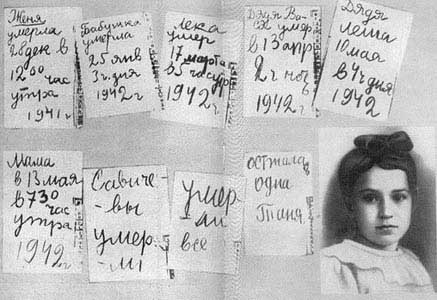
Scale defines what is known as the shared national historical experience. Or, in a layman's lingo--until they shoot or bomb you to smithereens, you have no idea. Russia (USSR) lost in WW II 27 million people, most of them civilians, US lost about 300,000--all servicemen. European Russia was obliterated, in the US-the hardship of fast getting out of Great Depression was in the range of rationing the ham, in Leningrad people were happy with 125 grams of faux-bread. While US students study Anne Frank's diary, the Diary of Tanya Savicheva is unknown. 


The question is, thus, what impact? And that is where the whole thing goes haywire. It is one thing to study some political mambo-jumbo in the Ivy League madras,  totally another--to live, generation after generation, in the family knowing that someone close was killed on the fronts, or survived through concentration camp or slavery, of the WW II. Scale defines the attitude to war. Russians hate war, I hate it, and I have some minor experiences. Continental warfare, its scale, its savagery, especially in the 20th century, is beyond comprehension of the overwhelming majority of the Americans and political class they elect. John Boehner cries, remembering his childhood, well, he should have tried to see my father choking on food in his mature years, in the fat times of Brezhnev's stability. They didn't teach kids, who just lost mother from hunger and father killed at the front, how to eat in 1941-42--they needed to survive. I don't cry, I carry on, I just hate war. The question, thus, which one has to ask is this--do Madeline Albright, Samantha Power, Susan Rice or Victoria Nuland have any idea what war is? I am pretty sure they don't, as famous "aneurism" quote from Collin Powell suggests. 

Behold, we have an Ivy League educated lawyers and b.tches coming on-line and they will tell us how cool it is to die for their egos "larger than cathedrals"(c) since they, surely, know what are they talking about. 

Excuse me, friends, I must catch my jet
I’m off to join the Development Set;
My bags are packed, and I’ve had all my shots
I have traveller’s checks and pills for the trots!
The Development Set is bright and noble
Our thoughts are deep and our vision global;
Although we move with the better classes
Our thoughts are always with the masses.
In Sheraton Hotels in scattered nations
We damn multi-national corporations;
injustice seems easy to protest
In such seething hotbeds of social rest.
We discuss malnutrition over steaks
And plan hunger talks during coffee breaks.
Whether Asian floods or African drought,
We face each issue with open mouth.

Ross Coggins

Here is a good quote by Michael  Lind. 


"The possibility of military defeat and invasion are usually left out of discussion....in the United states and Britain. The United States, if one discounts Pearl Harbor has not suffered a serious invasion from 1812; Britain, though it has been bombed from the air in the (20th century), has been free from foreign invasion even longer....Elsewhere in the world, political elites cannot as easily separate foreign policy and economics."(c)

I am pretty sure that mayors of L.A. or Boston sleep and envision Russian armored invasions in their respective cities.... Oh, wait, it happened before, I know....Wolverines!!!!!!!!!!

To be continued.........


Sunday, December 14, 2014

Sand castle geopolitics I


Here is a simple and crude mental experiment.  Consider these two statements about the same event below:

1. I went to Home Depot, bought myself another can of paint and painted over a big scratch on one of my walls.
2. I painted one of my walls and made a big scratch on it.  I went to Home Depot and bought another can of paint to paint over the scratch. 

Anyone, even with the rudimentary logic and attention, will easily notice that, while using almost identical set of words and, seemingly, same facts, two statements above tell quite a different story. Statement #1 leaves more numerous opportunities for interpretations on the cause of the scratch, while #2 names the cause directly--it is me. Yet, both statements are true, but the real truth is delivered by the second statement only. The reason it does? It establishes causality. It also demonstrates how the information differs from the knowledge. Of course, this example is very crude,  but it will do for the sake of argument. Normal people, to whom yours truly hopefully belongs, want, and sometimes demand, to know the truth. Apart from the purely moral considerations, we want the truth because it allows us to see causality. Establishing this connection between cause and effect is crucial--it allows us to choose an appropriate course of actions.

Information by itself is not enough and it becomes a knowledge only when a minimally necessary number of cause and effect connections is established and, generally, the information is placed in a proper context. Modern militaries use a somewhat similar method when they develop, again crudely presented, concepts of:

Situational Awareness--I know where my adversary is;

Tactical Awareness--I know what my adversary is going to do.  

In general, militaries try to obtain the truth about their battlefields. You may say, sure--it is the same in the everyday life, surely it is true for academia. Not so fast. Military pays with lives and health if it gets it wrong, while, as the Sayre's Law states:"Academic politics is the most vicious and bitter form of politics, because the stakes are so low." It is very true but with one very substantial correction--in the long run stakes can grow very high. Sayre's Law has another derivative--the patriotism is directly proportionate to the distance from the battlefield. Today, when one looks at the overall state of the American political class and the global mess it helped to create, one has to ask the question--what were they thinking about? Well, for starters we can say what they, and the academe which serves this class, were not thinking about--the truth. In fact, the idea of the American Exceptionalism, and that's what dominates an American political discourse today, is so detached from the reality and the basic facts of global history, it is so antithetical to the laws of cause and effect, that it is worth taking a brief look into the recent past. No, I am not going to quote Alexis De Tocqueville. 

The crucible of the modern world we live in remains on the battlefields of the World War II. It was an event of unprecedented scale in human history. In fact, it dwarfed anything humanity had experienced before. The Allied victory over Nazism seemed to pave the way to a better future but things changed very fast. One way they changed was the fact that, as David Glantz and Jonathan House note in their seminal "When Titans Clashed" (pages 275-276):"...the Soviets, by rights, had an undisputed claim to the lion's share of the spoils of this victory over Nazi Germany. In Western perceptions, however, the political consequences of that victory deprived the Soviet Union of that right." Here, these two brilliant American scholars, make one substantial mistake--the claims were not "undisputed", the whole industry, from media to academe, was born to dispute and to completely pervert the history of WW II. This industry is alive and well and it continues to work to reinforce generally Anglo-Saxon, and American in particular, point that it was thanks to the United States that the Nazi Germany was defeated. One of the ways to do it is to, and you may have guessed it already, break the causality link and deprive a proper context--exactly as it was done in the statement #1 in the beginning of this post.

Here is how Life celebrated the D-Day in 2014
I love Ike, I mean it but the claim is dubious


I foresee some, not entirely illegitimate, claims by Americans that the US is a free country and people are free to publish whatever they want and read whatever they want. Agree, it is a valid argument, it is also one of the reasons I have an admiration for the United States. But what matters here is not what some brilliant American scholars write as an exception, however significant, to dominating narrative,  or what is the opinion of a fairly thin strata of the American history buffs who do bother with educating themselves.  Majority of people do not read these kinds of books, they just follow what is being dispensed to them by the mass-media and American mass-media, virtually without any exception insist--it was the United States who beat Hitler and thus saved the world. Majority of Americans and, what is most fascinating and dangerous, US political class honestly do believe it. One of the three major pillars on which contemporary American exceptionalism rests is precisely this myth of the United States winning the WW II and (re)emerging as the preeminent global power for "good".  But the conventional wisdom states that sand castles do not last. This will help us understand why the whole gigantic blunder in Ukraine will have, and is already having, huge ramifications for the United States............

To be continued....